
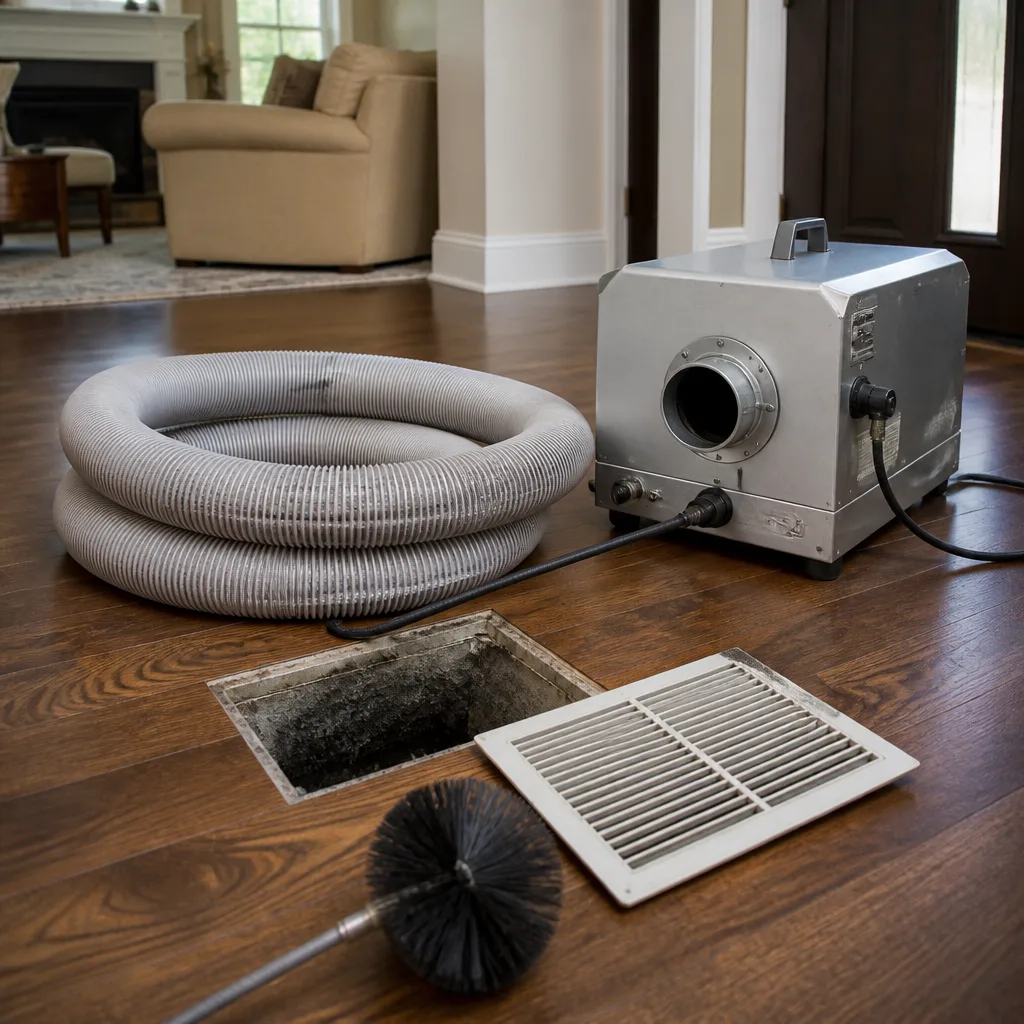
 Whole-home duct cleaning
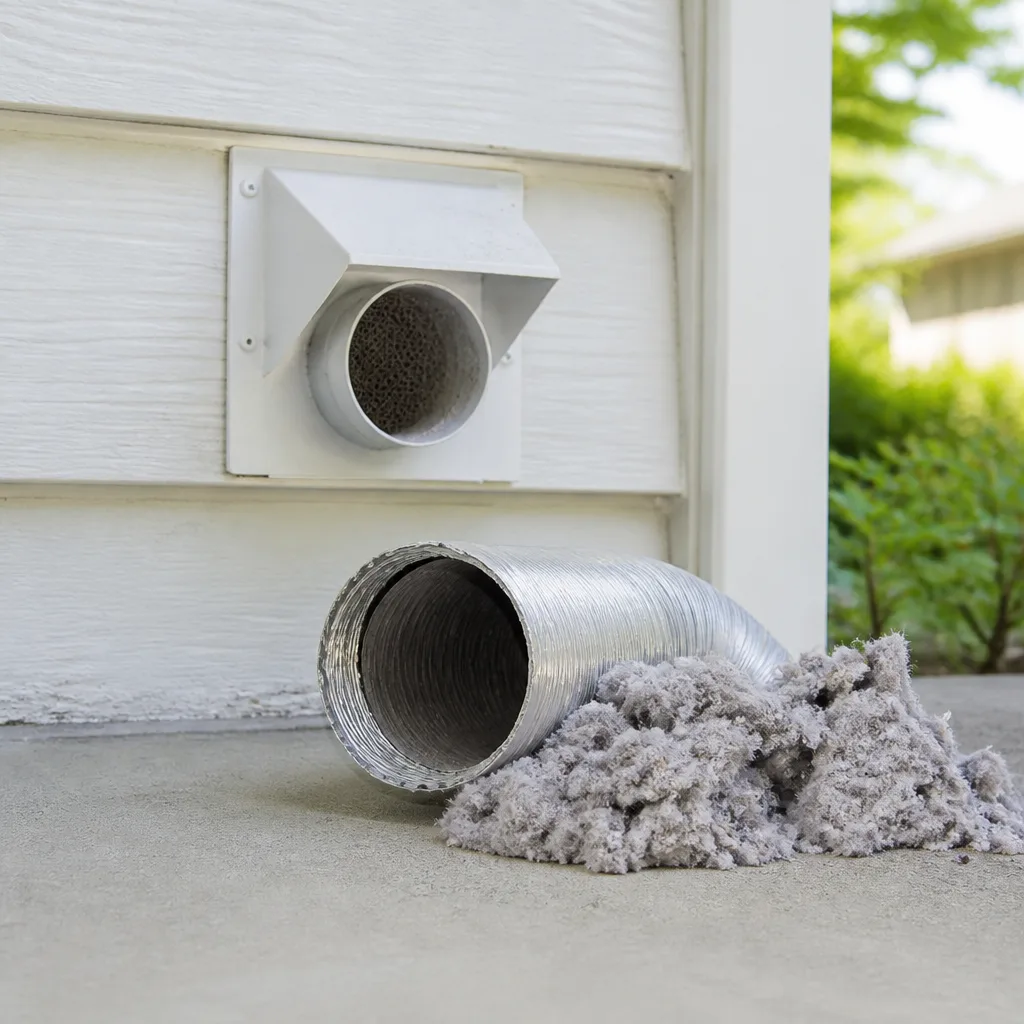 Dryer vent cleaning
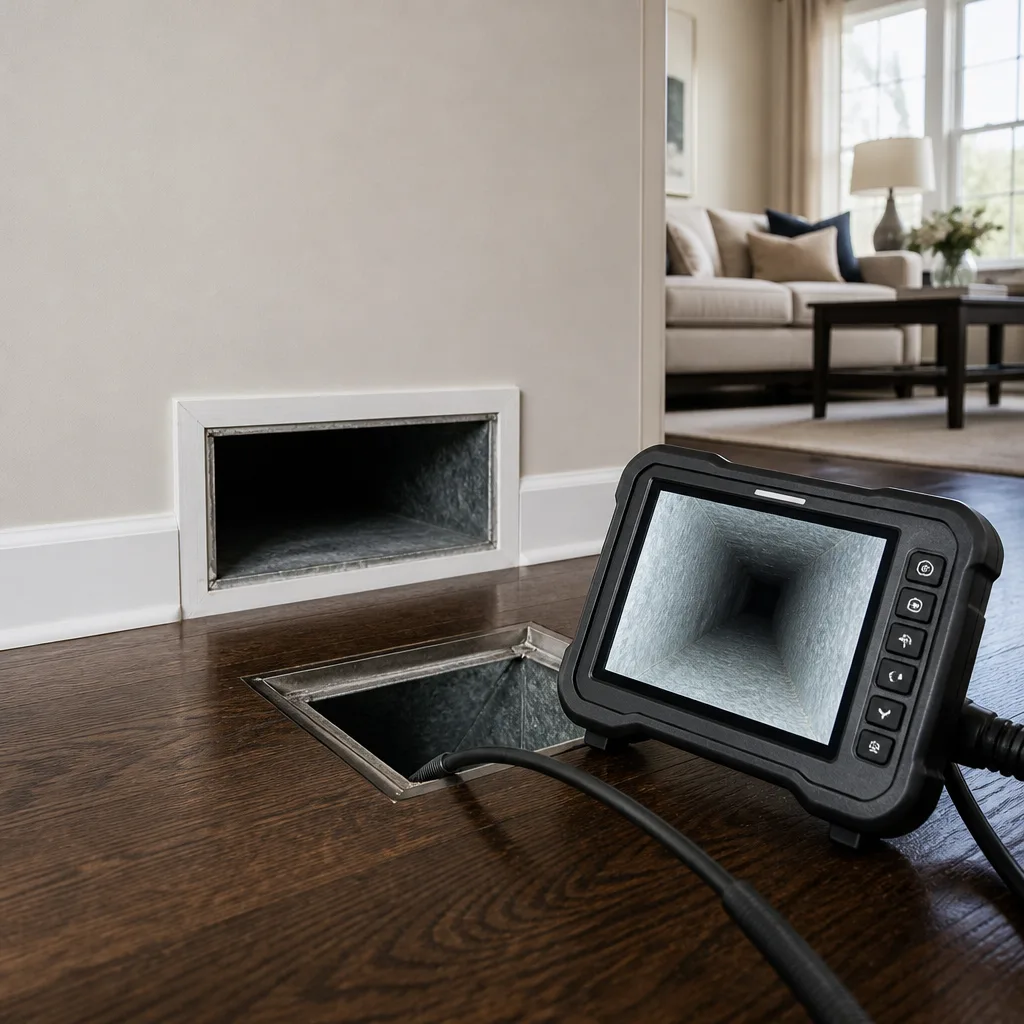 Camera inspection
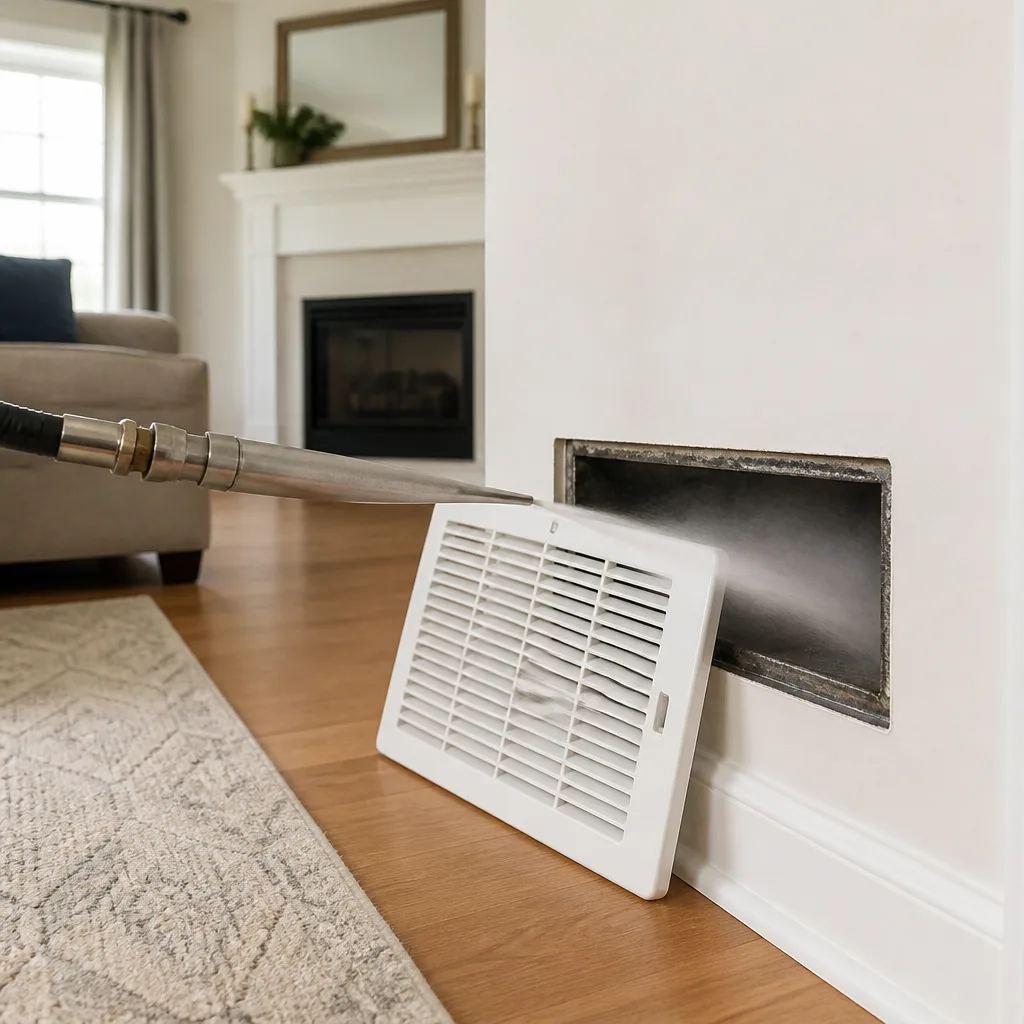 Sanitizing & deodorizing
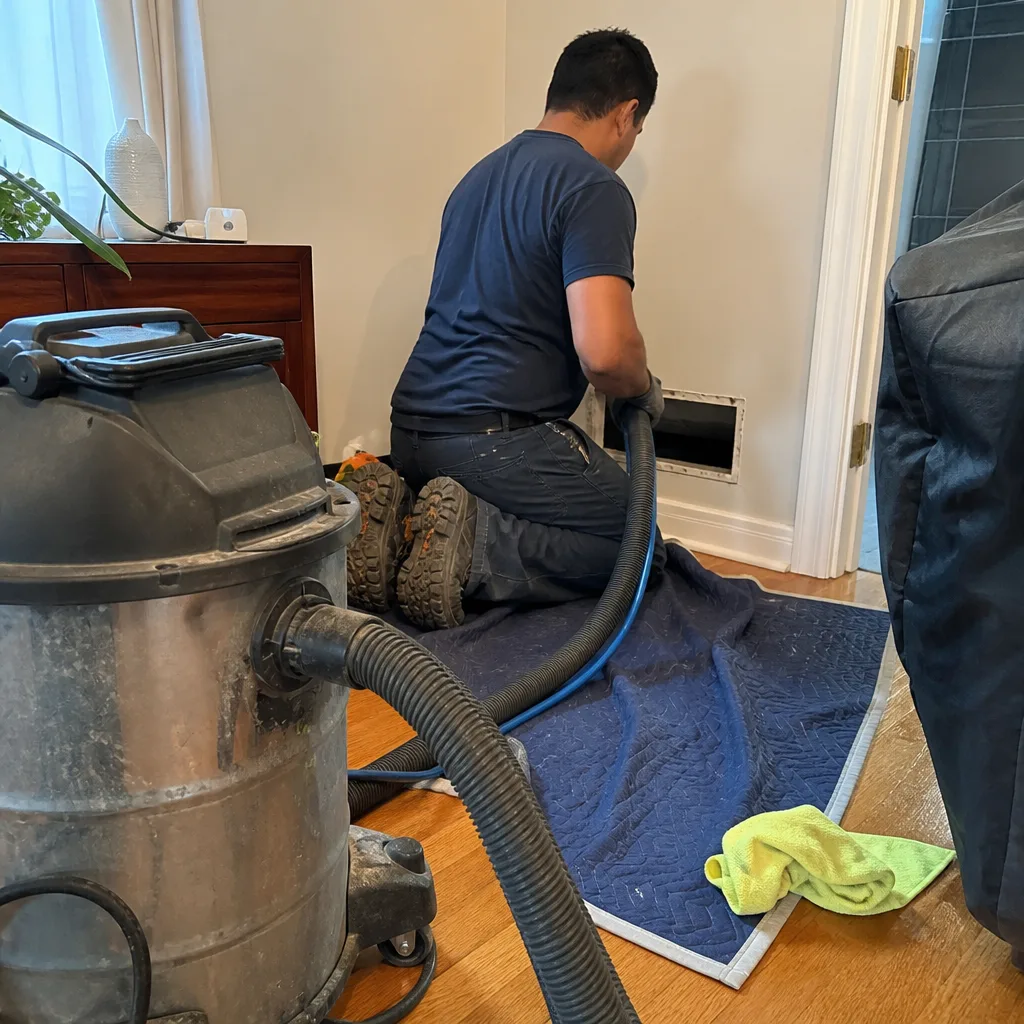
Whole-system duct and dryer vent check with before-and-after photos - you see exactly what came out of your vents
That "$99 whole-house special" is a bait ad - the real number appears once they are in your hallway, or the "clean" is a shop-vac at the register. We photograph the inside of your ducts before and after instead.
Rotobrush Vent Sanitizing: The Queens Owner’s Guide
If your Rotobrush vent sanitizing system has stopped delivering the sanitizer mist, is leaking at the connection points, or the pump runs but nothing comes out of the nozzle, we can usually get you squared away the same week. Typical installed replacement of a Rotobrush vent sanitizing component in Queens runs between $145 and $385 depending on whether we’re swapping a nozzle, a feed line, a pump seal, or the pump itself. Most owners first notice the problem when the sanitizer smell is fainter than usual after a cleaning, or when liquid pools under the machine instead of misting through the vent run.
We’re an independent service provider in Queens. We’re not affiliated with Rotobrush, but we stock and install their vent sanitizing components because we run Rotobrush equipment on our own trucks every day. When a part fails on your machine, you want a tech who knows how that part behaves at hour 600 versus hour 60, not someone reading the manual for the first time in your driveway.
Which Rotobrush Models This Applies To
Rotobrush has shipped a few generations of vent sanitizing hardware over the years, and not every part crosses between them. The most common setups we see in Queens homes and mixed-use buildings are the aiR+ series and the older Roto-Vision 20/20 platforms, along with their accompanying sanitizer injection attachments. The sanitizer nozzles and feed lines that fit the aiR+ usually do not seal correctly on the older Roto-Vision fittings, which is a compatibility gotcha that’s caused more than one owner to order the wrong part online and discover it mid-job when the fitting drips instead of seals.
If you can, read the model plate on the machine’s body or carriage before you call. The plate usually lists a series designation and a serial prefix that tells us which generation of sanitizing hardware you have. If the plate is worn off, measure the outside diameter of the sanitizer feed line with a caliper. The 3/16-inch line is used on the older series, while the newer units run 1/4-inch. That single measurement rules out half the wrong-part possibilities on the phone.
On the OEM-versus-aftermarket question: for Rotobrush-specific sanitizing components, we recommend OEM or a direct-fit equivalent from a supplier that machines to Rotobrush tolerances. Aftermarket nozzles with slightly oversized orifices are common and cheap, and they throw off the mist pattern enough that you get uneven coverage inside the vent run. The sanitizer has to coat the duct surface to do its job. A nozzle that spits instead of mists leaves half the duct untreated, and you’d never know it unless you camera the run afterward.
Styles & brands we work with
Signs Your Rotobrush Vent Sanitizing Is Failing
- Weak or no visible mist at the nozzle tip. Usually a clogged orifice or a pump that’s lost its prime. If the pump runs and the reservoir level isn’t dropping, you’re probably looking at a blocked nozzle or a cracked pickup tube letting air in.
- Sanitizer pooling under the unit. That’s typically a failed O-ring or a hardened feed line that’s split at the barb fitting. It never gets better on its own; the leak only grows as the line flexes.
- Machine runs louder than it used to during sanitizing. A pump that’s working against a restriction makes more noise. It’s often the first warning before a nozzle fully clogs or a line kinks behind a panel.
- Intermittent spraying, then nothing. Old check valves inside the pump wear out and start sticking. The pump builds pressure, the valve pops, it sprays for a second, then it stalls again.
- Sanitizer smell is barely noticeable after a job. If your nose used to tell you the system worked and now it doesn’t, trust that. Your coverage has dropped, and the mist pattern is the usual culprit.
See the difference
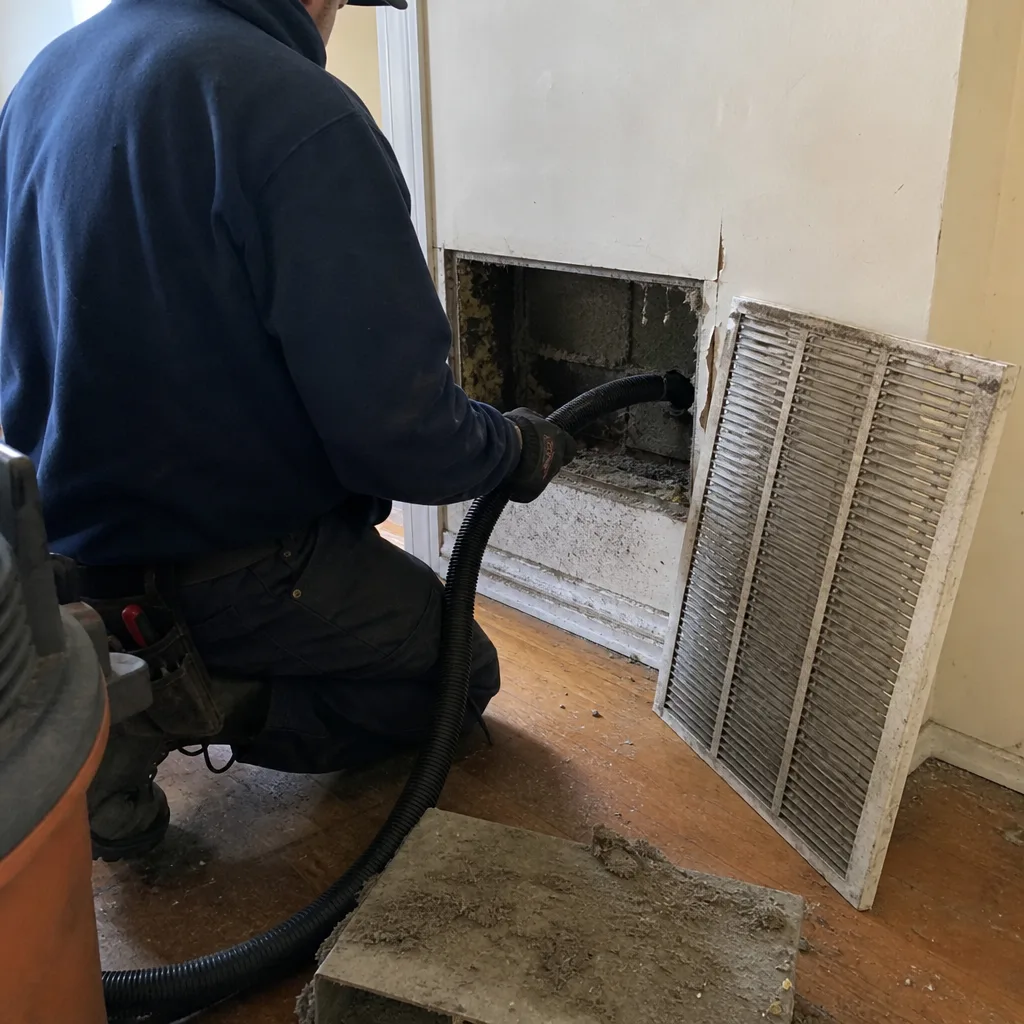 Before
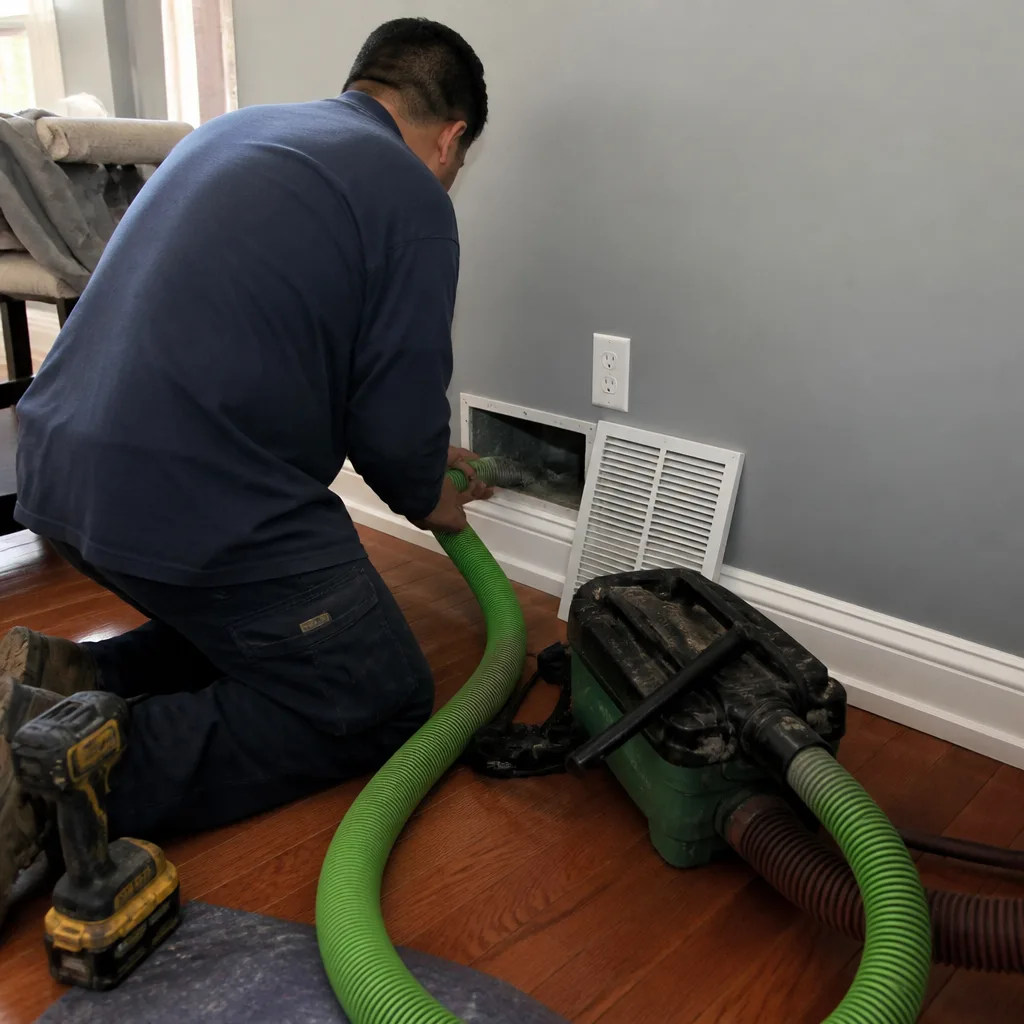 After
After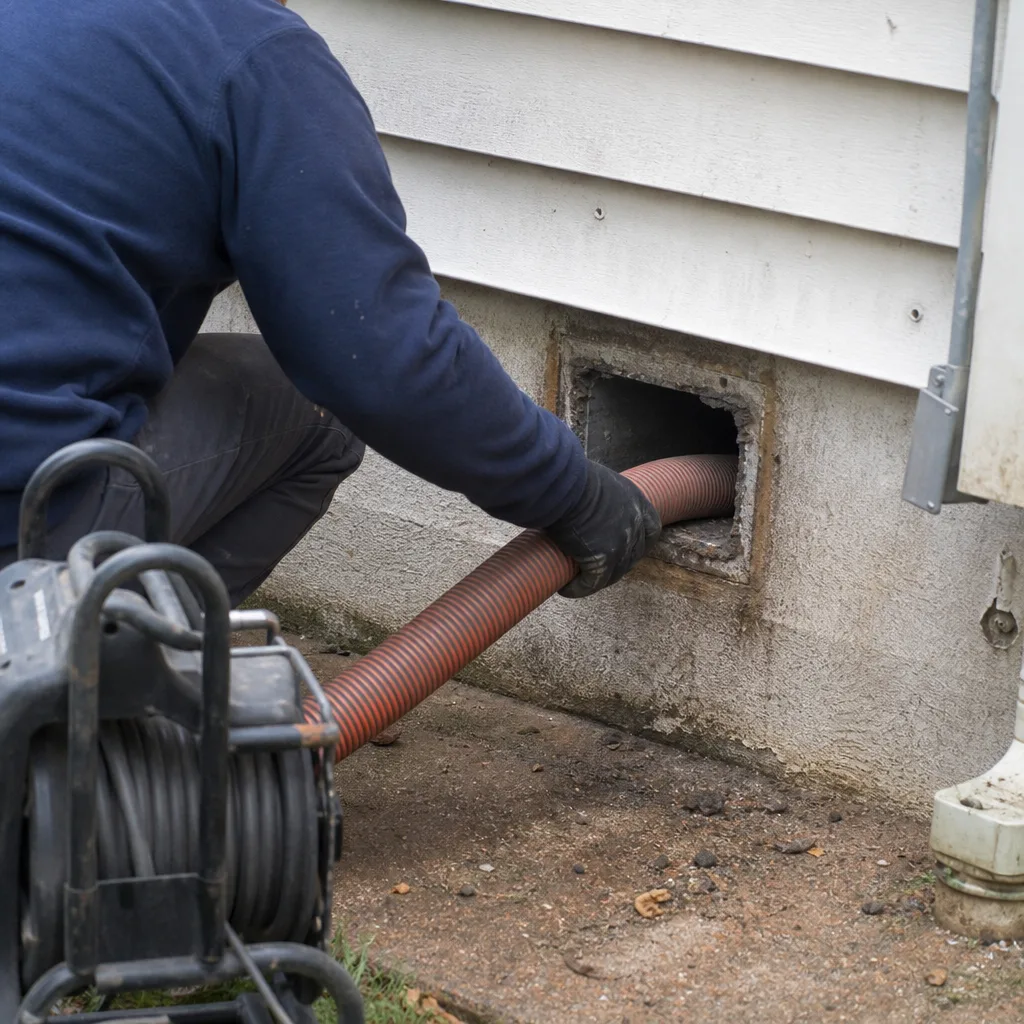 Before
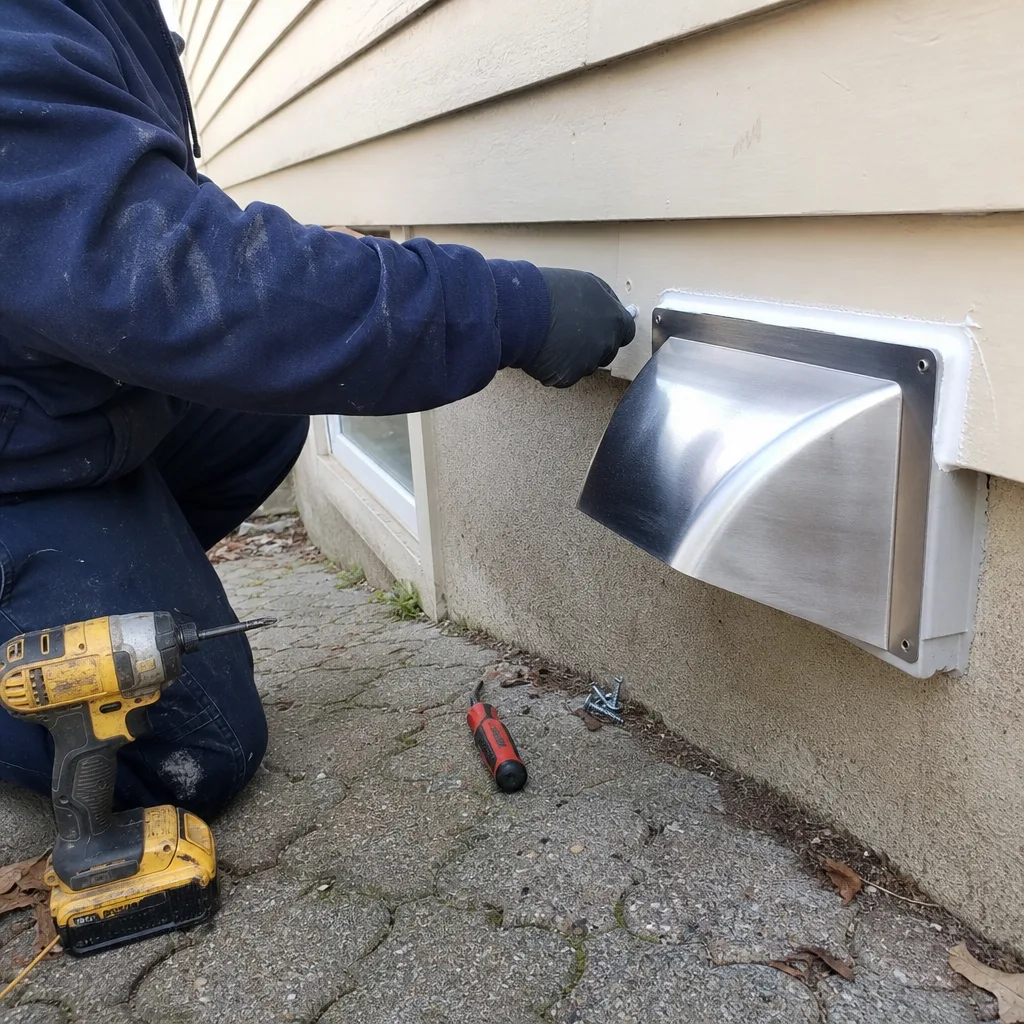 After
After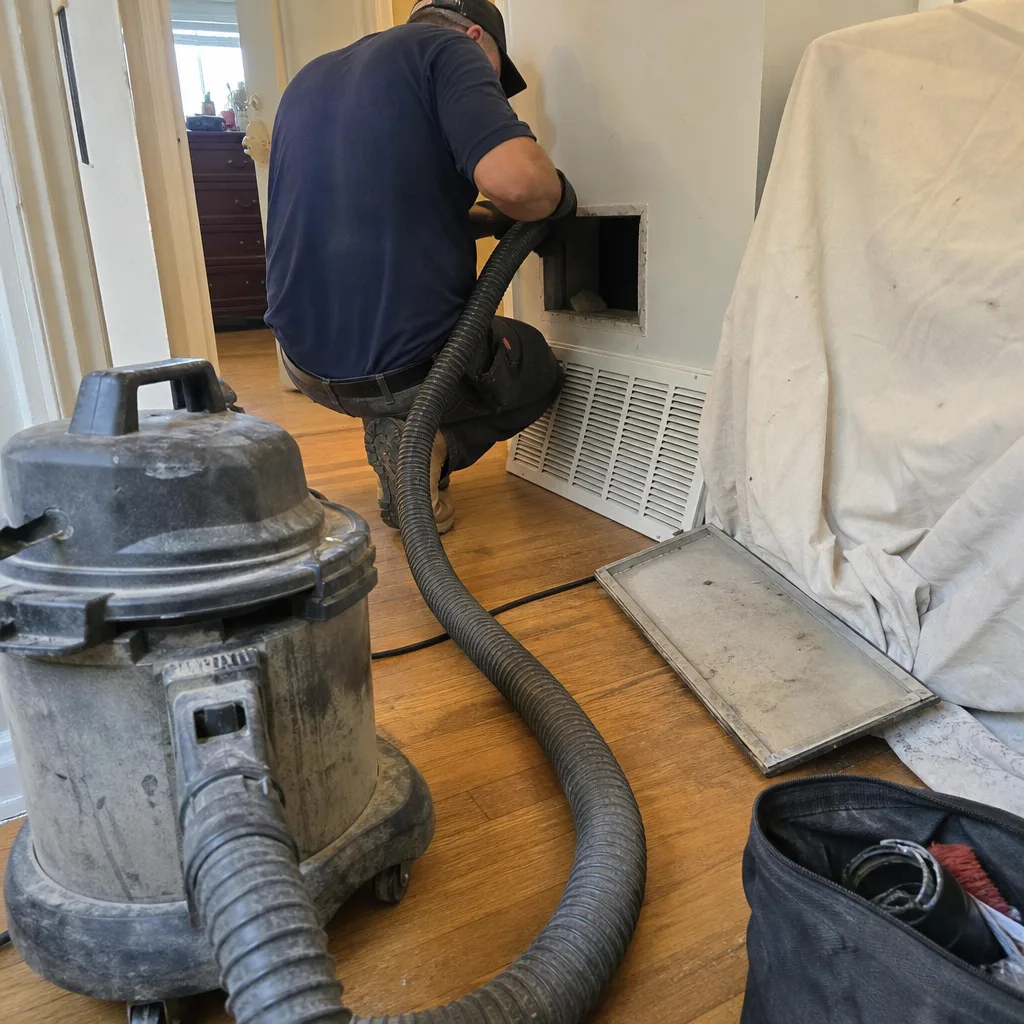 Before
 After
AfterReplacement Cost & What’s Included
In Queens, expect the range above: $145 for a basic nozzle and O-ring swap, up to $385 for a full pump replacement with new feed line and a calibration pass. The spread exists because the part itself varies widely; a new OEM pump for the aiR+ series costs more than a nozzle for an older unit, and the labor changes with access. Some of these machines are tucked into truck bays, basements, or tight mechanical closets where the swap takes twice as long.
Every quote includes the part, labor, testing, and a verification pass. We don’t do the “parts and labor are separate surprises” routine. You get one written price before any work starts, and it doesn’t change unless we find something structurally broken that we call you about first. The work is covered by our written guarantee, and if the repair doesn’t hold, we return at no charge. That’s the Linden standard, not a promotion.
DIY or Call Us?
Rotobrush vent sanitizing systems are low-voltage and low-pressure, so the honest answer is: you can safely inspect the reservoir, the feed line routing, and the nozzle tip yourself. Shut the machine down, unplug it, and look for cracks, kinks, and residue buildup. If you find a cracked line or a clogged nozzle and you’re comfortable swapping a barb fitting, you can handle that in an afternoon with the right part.
What goes wrong is usually the pump. Rebuilding or replacing the pump on a Rotobrush unit requires getting the prime back correctly, and if the check valves aren’t seated right, the machine will behave like it’s fixed and then fail on the next job. That’s the point where most Queens owners call us at (845) 237-0925. We’d rather you spend the phone call than a Saturday chasing a pump that won’t prime.
FAQs
Most systems in regular residential use hold up for 4 to 7 years in Queens, though the nozzle and O-rings often need replacing at the 2 to 3 year mark. New York’s humid summers and cold winters are hard on the seals and lines; the temperature swings make the rubber components harden faster here than they do in drier climates.
A clogged nozzle can often be cleaned, and a leaking O-ring is a straightforward fix, but a pump that’s lost pressure or a feed line that’s split is better replaced than patched. We won’t sell you a pump if a $12 seal kit fixes it, and we’ll show you the part that failed before we quote the work.
Most nozzle, line, and O-ring replacements take 45 to 90 minutes on site. A full pump replacement runs closer to two hours, including testing the prime and verifying the mist pattern with the machine running.
We keep the common nozzles, O-rings, check valves, and feed line sizes for the aiR+ and older Roto-Vision series on our trucks, so a high percentage of Queens jobs are done same visit. For less common parts, we order direct and typically have the part in hand within a few business days. We also stock parts for Lennox, Trane, and Carrier systems when a vent sanitizing issue crosses over into HVAC components.
The duct doesn’t lie. Neither do I. If your Rotobrush vent sanitizing setup is acting up in Queens, call (845) 237-0925 for a free estimate and we’ll tell you exactly what’s wrong, what it costs, and when we can fix it.
Written by Marcus Veale, Owner, Linden Air Duct Queens at Linden Air Duct Queens, serving Queens and nearby areas.