
Last updated October 15, 2026
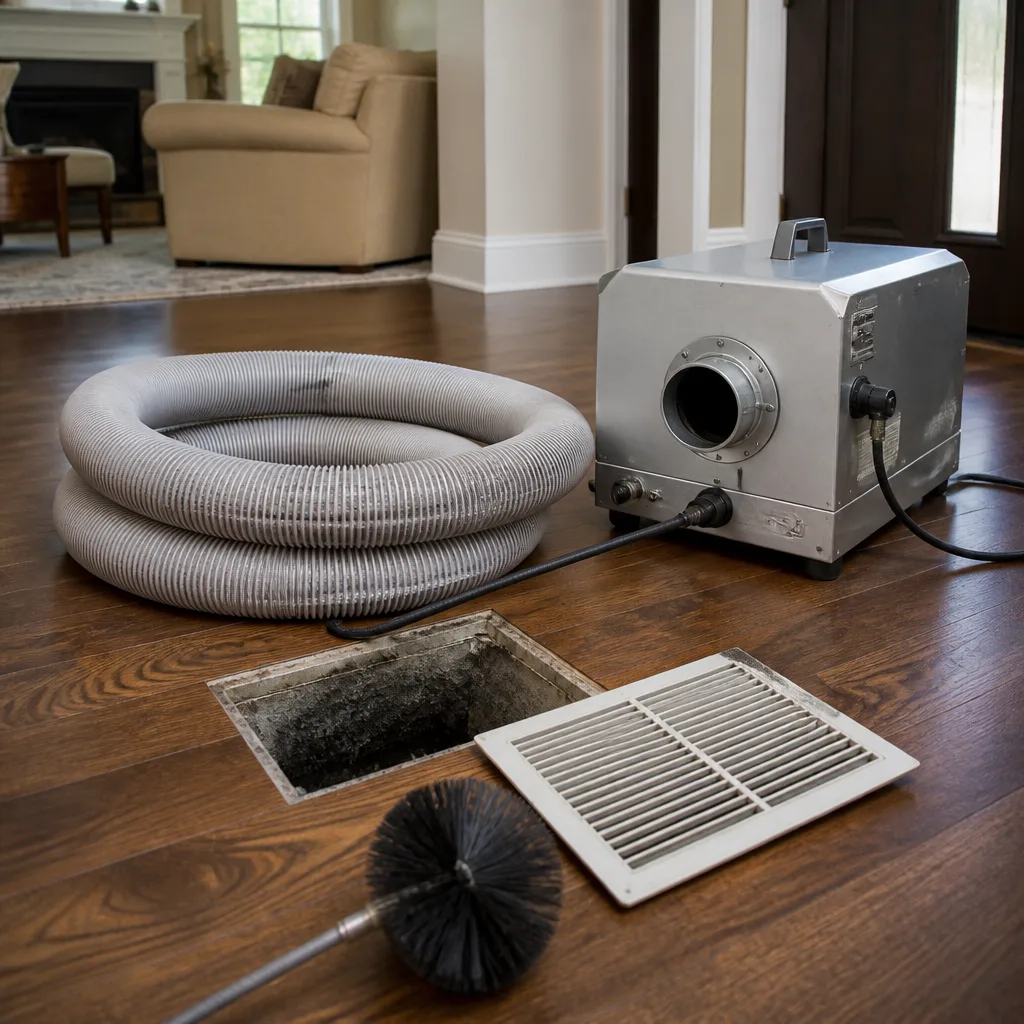 Whole-home duct cleaning
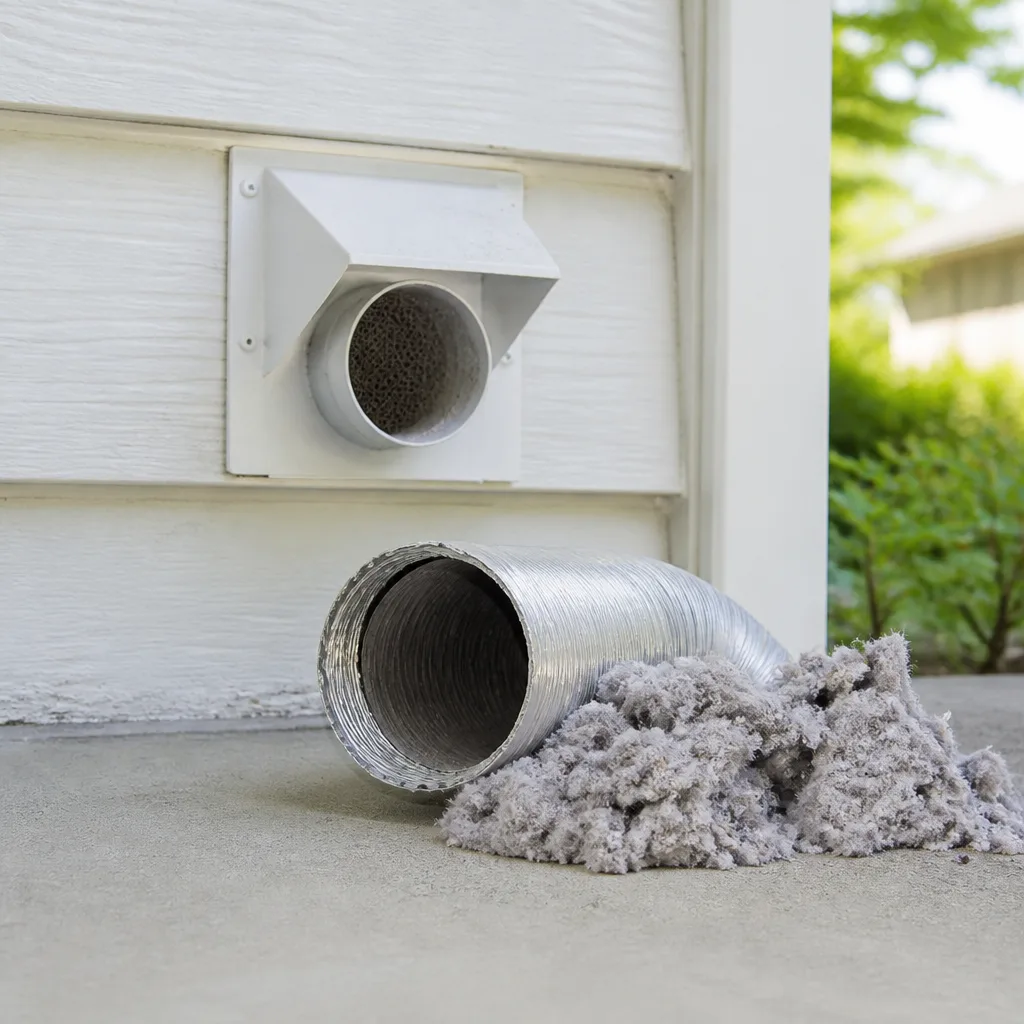 Dryer vent cleaning
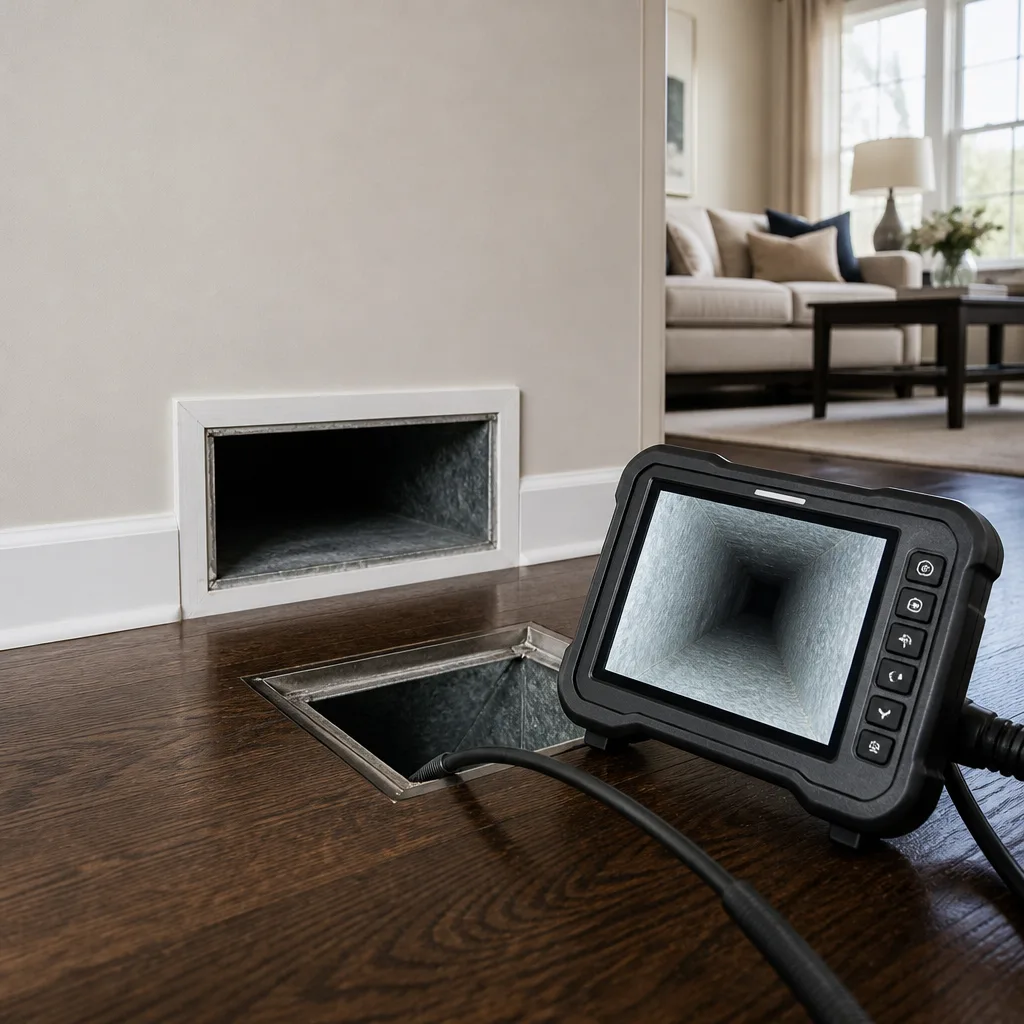 Camera inspection
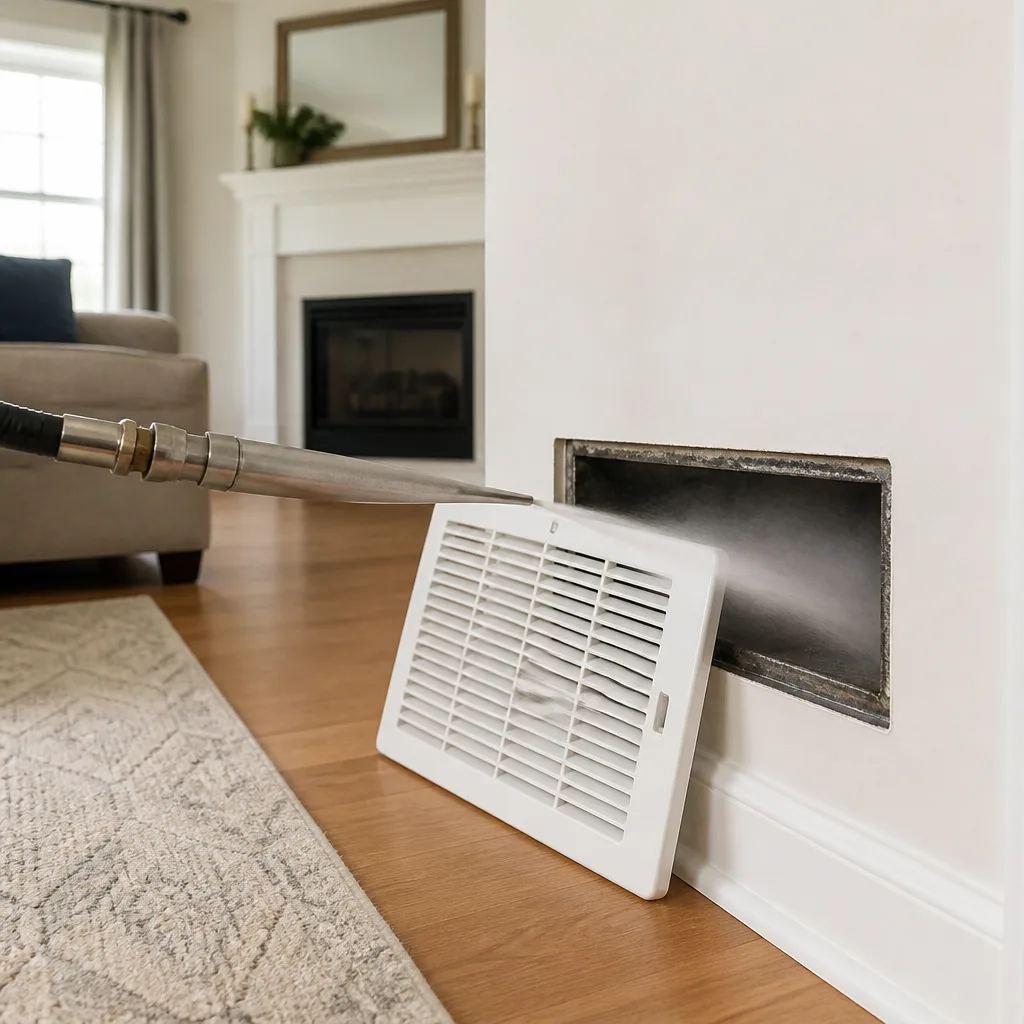 Sanitizing & deodorizing
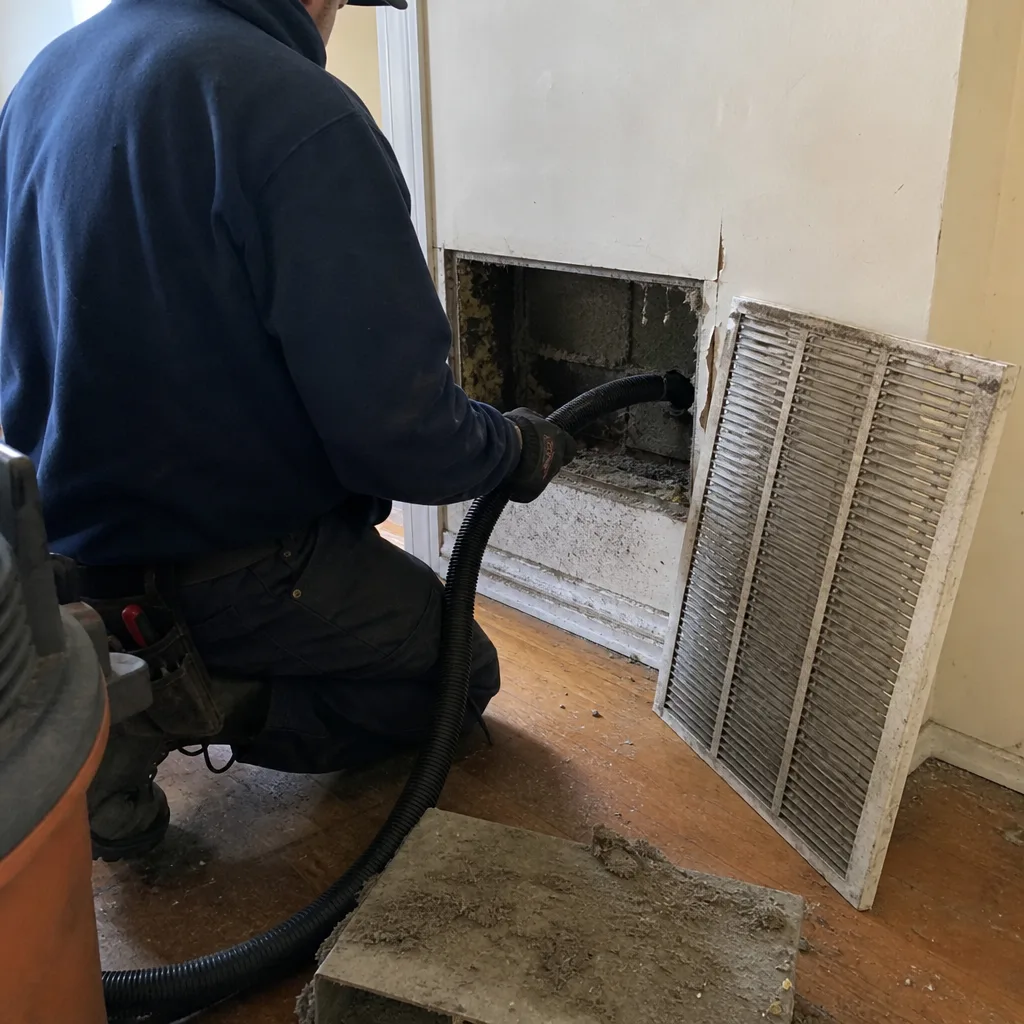
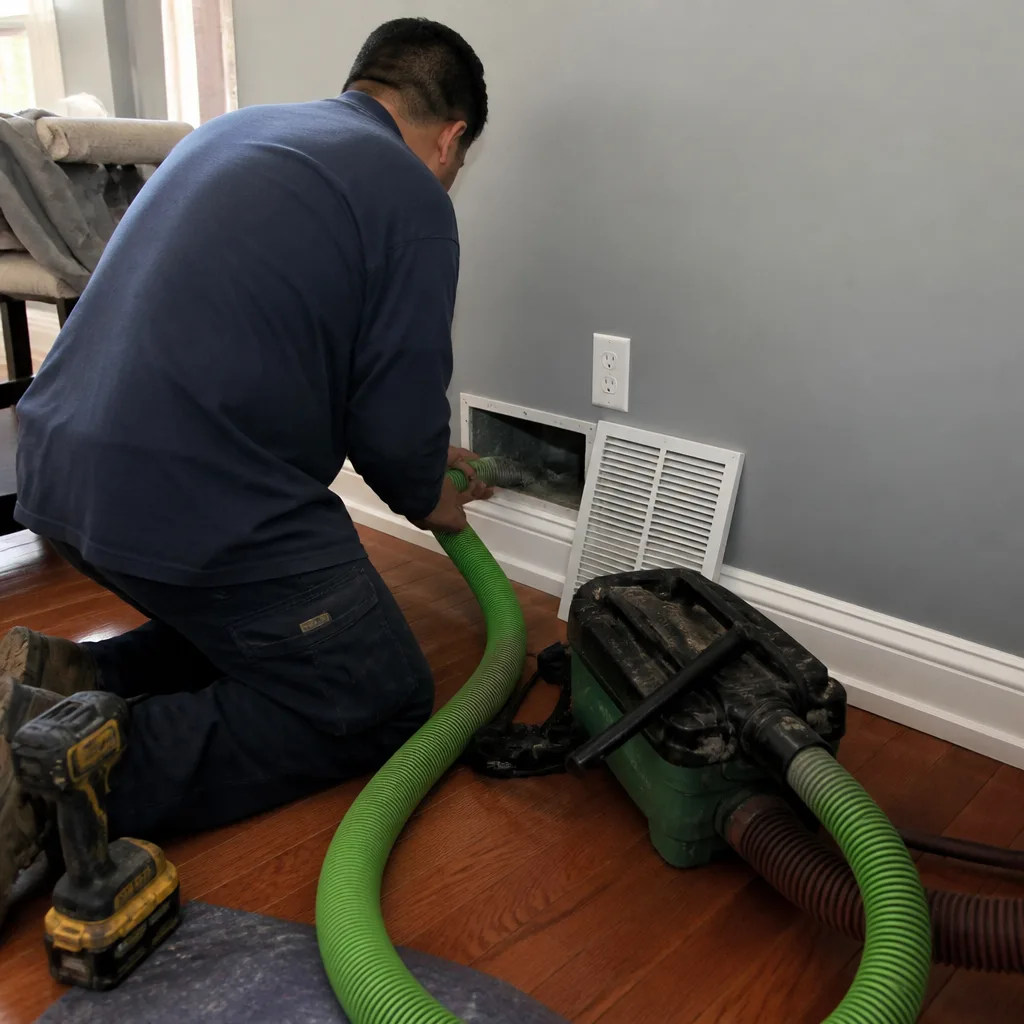
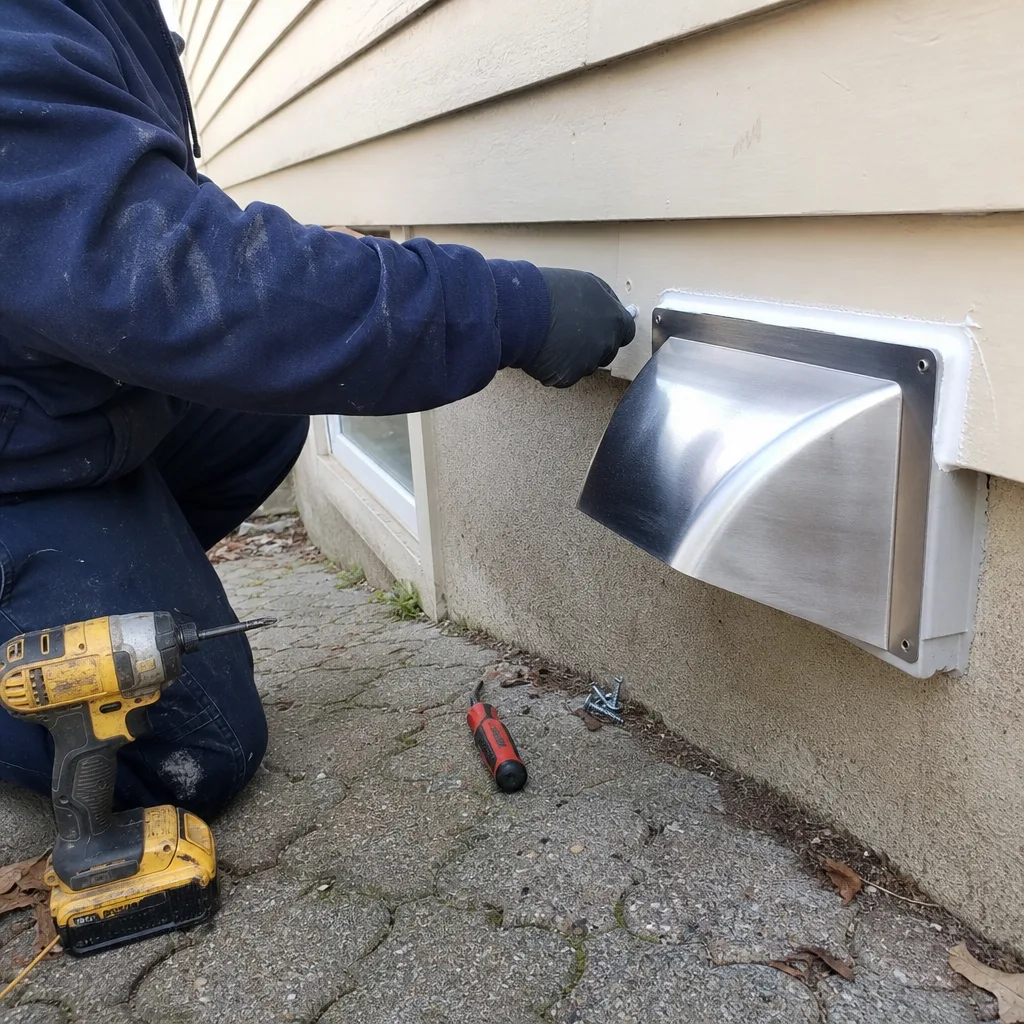
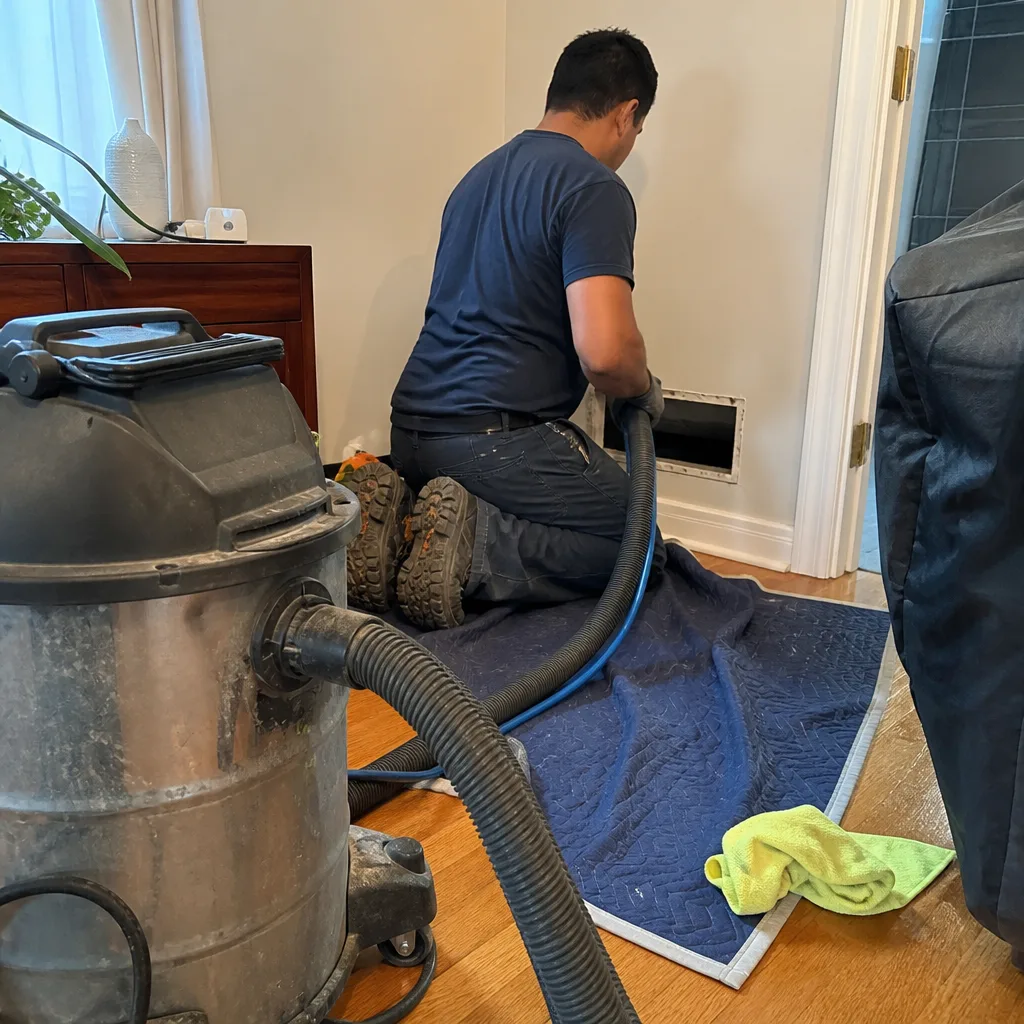
Whole-system duct and dryer vent check with before-and-after photos - you see exactly what came out of your vents
That "$99 whole-house special" is a bait ad - the real number appears once they are in your hallway, or the "clean" is a shop-vac at the register. We photograph the inside of your ducts before and after instead.
Air Duct Cleaning Warning Signs: A Queens Homeowner’s Reference Guide
When your upstairs bedroom feels stuffier than the rest of the house every summer and you’ve replaced the filter twice, you’ve already noticed a warning sign. You just didn’t know that’s what it was. Most duct problems in Queens don’t announce themselves with a bang. They creep in slowly: a room that never quite cools down, a musty smell when the blower kicks on, dust that reappears on the windowsill two days after you wiped it. This guide gives you a room-by-room, symptom-by-symptom reference so you can tell the difference between normal household dust and a duct system that’s asking for Air Duct Cleaning.
Quick Answer
The clearest warning signs that your air ducts need cleaning are visible dust or debris blowing from supply registers when the system runs, a persistent musty or stale odor that gets stronger when the heat or AC kicks on, rooms that stay uncomfortable no matter how you adjust the thermostat, and worsening allergy symptoms that ease when you leave the house. In Queens, where attached housing and shared walls are common, these signals can also originate from a neighboring unit’s ducts or a building-wide ventilation issue. If you notice two or more of these signs together, schedule an inspection rather than waiting for the problem to become obvious.
Styles & brands we work with
Table of Contents
- Room-Specific Symptoms: Duct Problems vs. Equipment Problems
- What You See at Registers and Vents: Diagnostic vs. Normal
- Health and Odor Signals: Biological Contamination vs. Particulate Buildup
- Attached Housing in Queens: When the Warning Sign Comes From Next Door
- The Severity Scale: Clean Soon vs. Shut It Down
- What You Can Check Yourself (And What You Shouldn’t Touch)
- Common Mistakes to Avoid
- When to Call a Professional
- Frequently Asked Questions
Room-Specific Symptoms: Duct Problems vs. Equipment Problems
One of the most common calls we get from Queens homeowners starts with the same sentence: “My bedroom is always ten degrees hotter than the living room, and nobody can tell me why.” The answer often lives in the ductwork, not the thermostat. Understanding how rooms talk to you through their airflow patterns is the first step in knowing whether you need duct cleaning, an HVAC repair, or both-topics we explore in depth in DIY vs Professional Air Duct Cleaning: The Queens Homeowner’s Decision Guide.
The Bedroom That Never Cools Down
A bedroom that stays warm in summer or cold in winter while the rest of the house feels fine usually points to restricted airflow in the branch duct serving that room. The restriction could be dust and debris caked along the duct walls, a crushed or disconnected section, or a damper that’s been closed or stuck. Here’s how to tell: if the air coming from the register in that room feels noticeably weaker than air from other registers, the problem is air delivery, not the AC unit itself. The equipment is doing its job. The pathway is compromised.
The Basement That Always Smells Damp
In Queens, basements in older homes often share space with duct runs that have absorbed moisture over decades. When you smell dampness only when the system runs, it’s not the basement floor. It’s the ducts. Moisture inside ductwork creates conditions where biological growth thrives, and the blower distributes that smell through the entire house every time it cycles. This is a sign that goes beyond routine cleaning: you may need repair or replacement of affected sections, not just a cleaning pass.
The Room Above the Garage
Rooms above attached garages or over unconditioned spaces often show duct warning signs earlier than other rooms. The longer duct runs, combined with temperature swings in the unconditioned space below, create condensation points where dust and moisture mix into a paste that narrows the duct interior over time. We’ve seen ducts in Queens homes where a 6-inch run was reduced to an effective 3-inch opening by years of accumulated buildup. The fix requires professional cleaning with negative-pressure extraction to restore full airflow, not just a filter change. For a full breakdown of the process, see The Complete Guide to Air Duct Cleaning in Queens.
How to Tell Without a Service Call
- Hold a tissue near each register while the system runs. Compare airflow strength between rooms. A weak or fluttering tissue in one room but strong airflow in another points to a duct restriction, not an equipment failure.
- Check the temperature difference between rooms at the same time of day. A consistent gap of more than 4 degrees Fahrenheit between rooms with similar sun exposure suggests a delivery problem.
- Listen for whistling or rushing sounds at specific registers. That sound often means air is being forced through a narrowed opening, another sign of internal blockage.
- Remove the register cover (it usually lifts right off) and look down the first few inches of the duct with a flashlight. If you see dust caked on the walls or debris sitting in the bottom, the buildup extends deeper than you can see.
These checks take five minutes and give you a much clearer picture before you pick up the phone. If you’re still unsure whether what you’re seeing points to ducts or equipment, a professional inspection can settle it in one visit. We offer free estimates for homeowners throughout Queens and will tell you honestly if your ducts are not the problem. Learn more about our air duct cleaning process in Queens and what a standard inspection covers.
What You See at Registers and Vents: Diagnostic vs. Normal
Not everything you see on a vent cover is a warning sign. Understanding the difference between diagnostic residue and normal accumulation saves you from unnecessary worry and unnecessary spending. In our experience cleaning ducts across Queens, most of what homeowners photograph and send us falls into the normal category, but the diagnostic signs are unmistakable once you know what to look for.
Normal Dust Accumulation: Not a Warning Sign
Light gray, powdery dust on the outside of a register cover is normal. It travels with room air currents and settles on any horizontal or vertical surface, including vent grilles. This is the same dust you find on bookshelves and windowsills. It tells you nothing about the condition inside your ducts. Wipe it with a damp cloth and move on.
Small dust lines radiating from the register onto the surrounding wall or ceiling are also common, especially in homes with forced-air systems running frequently. This is room air being pulled across the vent face by supply pressure. It indicates that air is moving, which is what you want.
Diagnostic Signs That Do Matter
- Dark, greasy staining around the register opening: This is not ordinary dust. It indicates that particulates carried in the airstream are sticking to surfaces, which happens when duct interiors are coated with residue. In Queens kitchens, this often appears as a tacky film that won’t wipe clean with a dry cloth.
- Visible dust puffs when the system starts: If you see a small cloud of dust blow from a register in the first seconds after the blower kicks on, that’s debris dislodging from inside the duct. This is one of the clearest signs that cleaning is overdue.
- Debris larger than dust: Small bits of insulation, pet hair clumps, or what looks like sand accumulating on the register face or floor below indicate material inside the ducts that shouldn’t be there. In Queens homes, we’ve found everything from drywall chunks from renovations to children’s toys that found their way into open registers.
- Mold-adjacent discoloration on the register or surrounding drywall: Black, green, or brown staining that reappears after cleaning is a serious sign. It points to moisture in the duct system and possible biological growth. Don’t ignore this one.
A practical rule: if what you see on the register is powdery and light-colored, it’s probably normal room dust. If it’s dark, sticky, chunky, or reappears within days of cleaning, the duct interior needs attention. We clean ducts throughout the five boroughs, and Queens homes with older ductwork are consistently the ones where these diagnostic signs show up earliest. If you’re seeing debris blow from your registers, start with our air duct cleaning service in Queens to get a clear picture of what’s inside.
Health and Odor Signals: Biological Contamination vs. Particulate Buildup
This is the section where Queens homeowners often tell us they waited too long to call. Health symptoms and odors are easy to rationalize: it’s allergy season, the house is old, the dog sleeps in the bedroom now. But there are specific patterns that point directly to the duct system as the source, and learning to read them can save months of discomfort.
Odor Signals That Mean Biological Contamination
A musty or mildew smell that gets stronger when the heat kicks on in October is the classic signature of mold or bacterial growth inside ductwork. The smell lives in the ducts during the summer when warm, humid air moves through cool duct surfaces and condensation forms. When the heating season starts, the blower pushes that smell through every room. In Queens, where summer humidity is heavy and many homes have duct runs through unconditioned basements or attics, this pattern is especially common.
A persistent stale, “old house” smell that doesn’t improve after opening windows points to contaminated duct surfaces. It’s not the house. It’s what has accumulated inside the walls and ceilings where the ducts run.
The smell of decay, ammonia-like odors, or sudden unpleasant smells near specific registers suggests rodent activity. Mice and rats in Queens find their way into duct systems through gaps in the foundation or disconnected sections in crawl spaces. When they nest or die inside a duct, the smell cycles through your living space every time the blower runs. This is a serious situation that requires duct cleaning and repair of the entry points, not just air freshener.
Health Signals That Point to Ducts
The most telling health pattern is the one that follows the system’s cycle: symptoms that flare when the heat or AC runs and ease when it doesn’t. Here’s what to watch for:
- Allergy symptoms that improve away from home: If you feel better at work or on vacation and worse within hours of returning home, the difference is environmental. Ducts that distribute dust, pollen, pet dander, and mold spores continuously can explain this pattern in a way that seasonal allergies alone cannot.
- Morning congestion specific to certain rooms: Sleeping in one bedroom causes congestion but sleeping in another doesn’t. That’s a room-specific delivery problem, not a general seasonal issue. The duct serving that room is likely the source.
- Family members with different symptom patterns: One household member has persistent respiratory irritation while others don’t. Unlike broad seasonal allergies, this can point to specific sensitivity to biological contaminants in the airstream. The affected person may simply be more reactive to what’s being distributed.
- Symptoms that started after a leak, flood, or renovation: If someone’s breathing issues began after a roof leak, a flooded basement, or a major renovation that produced drywall dust and debris, the ducts may have absorbed moisture and particulates during that event. In Queens, where many homes predate 1950, renovations frequently disturb decades of settled material inside duct runs.
We’re not doctors, and this guide doesn’t replace medical advice. But we have cleaned enough duct systems in Queens to know that when health symptoms map to the heating and cooling cycle, the ducts deserve a serious look. Our air duct repair service in Queens addresses not just cleaning but the underlying damage that allows contamination to take hold in the first place.
Attached Housing in Queens: When the Warning Sign Comes From Next Door
Queens is a borough of attached homes. If you live in a row house in Astoria, a semi-detached in Bayside, or a co-op unit in Forest Hills, your duct system doesn’t exist in isolation. Shared walls, shared crawl spaces, and sometimes shared duct trunks mean that warning signs in your home can originate from a neighbor’s unit. This is a problem unique to dense housing, and it changes both what you can diagnose and what you can fix.
How Neighbor-Origin Problems Show Up
You notice a smoky or cooking smell in your apartment, but nobody in your unit is cooking. The smell comes and goes, and it tends to appear when your system runs. This is a sign that your ducts connect to a shared trunk line, and air from a neighboring unit is crossing into your space. In some older Queens buildings, duct systems were originally installed with shared risers or common return plenums that allow this crossover.
You find dust or debris appearing in your registers at a rate that doesn’t match your own household activity. If you live alone, keep a clean home, and still see dust accumulating unusually fast, the source may be a neighboring unit’s renovation or a shared duct section that serves multiple dwellings.
You smell mustiness that worsens at specific times of day. If your neighbor runs their system on a different schedule, their contaminated ducts may push air into your unit only when their system cycles. Tracking the smell’s timing can give you a clue about the source before you spend money on your own cleaning.
What You Can Do (and What You Can’t)
- Document the pattern. Keep a simple log for two weeks: when the smell appears, what rooms it affects, and whether your system was running at the time. This gives a professional a head start.
- Check your own system first. If your unit has its own air handler and ducts, a professional cleaning can seal off entry points and reduce crossover. If your ducts are clean but the problem persists, the source is clearly external.
- Talk to your building management or neighbor. In co-ops and condos, building management often has responsibility for shared duct infrastructure. In attached private homes, a neighbor may not know their ducts are the source. A respectful conversation with your evidence in hand is more productive than a complaint.
- Understand the limits. If the problem originates in a neighbor’s unit or a shared section you don’t control, cleaning your own ducts will only reduce, not eliminate, the issue. Sealing leaks in your unit’s ducts can significantly reduce crossover, but you cannot fix your neighbor’s system.
This is a situation where professional inspection makes a real difference. When we inspect duct systems in Queens attached homes, we look at where your ducts connect to structure and where air can migrate between units. Sometimes the fix is sealing. Sometimes it’s cleaning. Sometimes it’s a conversation we help you frame with the right information. If you suspect a neighbor-origin problem, Linden Air Duct Queens home has the details on how our inspection process works and what to expect when we visit your unit.
The Severity Scale: Clean Soon vs. Shut It Down
Not every duct warning sign carries the same urgency. One of the most useful things this guide can give you is a way to rank what you’re seeing or smelling, so you know whether to schedule a cleaning at your convenience or stop running the system until a professional looks at it. This scale is based on what we’ve observed in thousands of Queens homes over the years.
Tier 1: Book a Cleaning in the Next Few Months
These signs indicate accumulated dust and debris but no immediate danger. Schedule a cleaning when it’s convenient, ideally before the next heavy heating or cooling season.
- Dust puffs from registers on system startup, but no smell
- One or two rooms that are consistently 4 to 8 degrees warmer or cooler than the rest of the house
- Mild, occasional stale smell that you notice mainly when the system first starts for the season
- Visible dust buildup visible in the first few inches of duct at the register opening
- Family members with mild allergy symptoms that improve away from home
Tier 2: Schedule a Cleaning Within a Few Weeks
These signs suggest significant buildup, possible moisture issues, or growing contamination. You don’t need to shut the system down, but the problem will not improve on its own.
- Persistent musty smell that gets noticeably stronger every time the system cycles, not just at startup
- Visible debris at multiple registers, including particles larger than dust
- Dark staining around register openings that reappears after cleaning
- Rooms that are more than 8 degrees different from the rest of the house, or airflow so weak the register barely moves a tissue
- Allergy symptoms that have worsened steadily over weeks, not months
Tier 3: Do Not Run the System Until a Professional Looks at It
These signs indicate potentially hazardous conditions. Turn the system off and call a professional. Do not run the blower, change the filter and keep going, or try to fix the problem yourself.
- Strong, persistent musty or moldy odor that fills multiple rooms and does not diminish when the system is off
- Visible mold growth on or around registers, inside the duct opening, or on nearby walls
- The smell of decay or dead animals coming from specific registers
- Sudden onset of respiratory distress or asthma attacks that correlate with system use
- Water dripping from registers or visible water damage on ceilings near duct runs
- Gas-like odors (leave the home and call your utility provider or 911 immediately, then address the ducts after safety is confirmed)
This tiered approach puts you in control. You don’t have to guess whether a problem is urgent. If what you’re seeing matches Tier 3, shut the system off and call us at (845) 237-0925. We’ve handled serious contamination cases across Queens, and we’ll tell you honestly what you’re dealing with before any work begins.
What You Can Check Yourself (And What You Shouldn’t Touch)
There’s a middle ground between ignoring your ducts entirely and calling a professional for every speck of dust. Knowing what to look at yourself, and what to leave alone, saves you money and avoids making problems worse. This section covers the practical checks any Queens homeowner can do safely.
Safe DIY Checks
- The tissue airflow test. Hold a tissue at each register with the system running. Compare airflow strength between rooms. A weak or fluttering tissue where others are strong suggests a restriction.
- The flashlight peek. Remove the register cover (most lift off with a gentle pull or a couple of screws) and look down the duct opening with a bright flashlight. You’re looking for caked dust on the walls, debris sitting at the bottom, or moisture beading on the interior surface.
- The filter check. Replace your filter and note how it looks after 30 days. If it’s caked with dust and debris after a month, your ducts are carrying heavy particulate loads. In Queens homes with pets and older ductwork, this is one of the earliest warning signs you’ll see.
- The smell mapping walk. On a day when you notice a smell, walk the house and note which rooms it’s strongest in. Is it near specific registers? Does it come and go with the system cycle? Mapping the smell’s location and timing gives a professional a diagnostic head start.
- The dust resettlement test. Wipe a clean horizontal surface near a register (a windowsill, a shelf) with a damp cloth. Check it in 48 hours. If a visible layer of dust has returned that quickly, your ducts are actively distributing particulates.
What You Should Not Do Yourself
Leave the actual cleaning to professionals. Store-bought tools, including long-bristled brushes and shop vac attachments, cannot reach the full length of duct runs and often knock debris loose without capturing it, making the problem worse. Negative-pressure extraction, the method used by professional equipment from brands like Nikro and Rotobrush, creates suction that captures debris as it’s dislodged. This is not something a consumer vacuum can replicate.
Also leave alone: any duct section showing signs of moisture, any duct with visible mold, and any situation involving rodents or their nesting material. These require professional containment and cleaning protocols, not to mention repair of whatever allowed the problem in the first place.
The checks above take a few minutes and cost nothing. If they reveal signs that point to a problem, a professional inspection is the next step. Our free estimates in Queens include a look at what you’ve found and an honest assessment of whether cleaning is the right call or whether the problem is elsewhere. If you’re not ready to call yet, this guide to air duct cleaning in Queens explains what a professional cleaning actually involves and what it should cost.
Common Mistakes to Avoid
- Replacing the filter and assuming the problem is solved. A clogged filter is a symptom of what’s flowing through your ducts, not the root cause. If the filter is filling up quickly, the ducts are carrying the load. Replacing the filter repeatedly without addressing the ducts is like bailing water without fixing the leak.
- Painting over dark stains near registers. If staining near a register reappears after you’ve painted, the source is inside the duct. Paint covers the evidence for a few months, then the stain bleeds through again. You’ve delayed the diagnosis and added a painting project to your to-do list.
- Attributing all musty smells to an old house. Many Queens homes are old, and some old-house smell is normal. But a smell that gets stronger when the system runs is not the house. It’s the air delivery system. That distinction is the difference between a minor cleaning and a serious mold remediation.
- Closing registers in unused rooms to save energy. In forced-air systems, closing registers increases pressure in the ductwork, which can force air through leaks and pull dust and debris into the airstream. It rarely saves meaningful energy and often makes duct problems worse. In Queens homes with older, leaky ducts, this is a common self-inflicted problem.
- Hiring based on the lowest quoted price. Whole-home duct cleaning that costs suspiciously little usually means the technician is not doing whole-home work. Per-vent pricing, bait-and-switch quotes, and “cleaning” that takes 45 minutes are common in this industry. A legitimate whole-system cleaning in Queens involves professional equipment, containment, and time. A price that seems too good to be true is a red flag.
- Waiting for visible mold before taking musty smells seriously. By the time mold is visible at a register, the contamination inside the duct run is typically well established. Musty smells arrive long before visible growth. Treating the smell as an early warning, not a nuisance, catches the problem at a stage where cleaning alone may resolve it.
- Ignoring room-specific temperature differences year after year. A bedroom that’s always 10 degrees off is telling you something about its air delivery. The longer you wait, the more debris compacts in that duct run, and the harder it becomes to fully clear. Early cleaning restores airflow. Years of neglect can mean that section needs replacement, not cleaning.
When to Call a Professional
Call a professional when your own checks reveal signs you can’t explain or fix. Dust puffs at startup. A smell that follows the system cycle. A room that stays uncomfortable season after season. Debris at the register that’s larger than dust. Any sign from the Tier 3 list above. You’re not expected to diagnose your ducts from the outside. A professional inspection takes an hour and gives you a clear picture of what’s actually inside the system, what condition it’s in, and whether cleaning or repair is the right next step.
Linden Air Duct Queens offers free estimates throughout Queens. Call (845) 237-0925 to schedule an inspection. We arrive in marked vehicles, show photo ID at the door, and put the price in writing before any work begins. Part of the Threshold Group family since 2004, we run background-checked, identity-verified technicians who respect your home and your time. If you’ve been noticing warning signs and waiting to see if they go away, now is the time to find out what’s actually going on inside your ducts.
Frequently Asked Questions
Whole-home air duct cleaning in Queens typically ranges from $350 to $800 depending on the size of the home, the number of duct runs, and the level of contamination. A standard single-family house with 8 to 12 vents usually falls between $400 and $600. Larger homes, multi-zone systems, or systems with significant buildup or biological contamination run higher. Be wary of quotes below $200: at that price, the cleaning is either not whole-home or not thorough. Also be wary of per-vent pricing models, which create pressure to sell more vents than you need. Linden Air Duct Queens writes one flat price for your whole system before any work begins, and that price does not change at the end of the job. Call (845) 237-0925 for an exact quote on your home, free.
Cheap duct cleaning quotes usually mean the technician is not cleaning the whole system. Common shortcuts include cleaning only the first few feet of each duct run from the register opening, skipping the main trunk line and return ducts entirely, using a consumer-grade vacuum that can’t create negative pressure, or quoting a low price and then “discovering” problems that require additional charges once the work begins. A legitimate whole-system cleaning requires professional equipment such as negative-pressure extraction units from brands like Nikro or Rotobrush, access to the main trunk line, and a technician who spends several hours on the job. In Queens, where duct runs in older homes are often longer and more contaminated than newer construction, thorough cleaning simply takes time and proper equipment. We put the price in writing before work starts and that price reflects real, whole-system work. If a competitor’s price is meaningfully lower, ask what they’re actually including.
Reputable duct cleaning companies provide evidence. At minimum, ask for before-and-after photos of the duct interior from inside the main trunk line and representative branch runs. These photos should show visible improvement in the duct surfaces. A company that cannot or will not provide photos hasn’t proven the work. Also look for a written report that describes what was found and what was done. Linden Air Duct Queens provides before-and-after photos from your own system so you can see the difference with your own eyes. Our 365-Day Done Right Promise is written on every job: if the work is not right, we make it right. That’s a documented commitment, not a verbal promise.
Most Queens homes benefit from professional air duct cleaning every 3 to 5 years. Homes with pets, smokers, recent renovations, or residents with allergies or asthma may need cleaning more often, in the 2 to 3 year range. Newer homes with well-sealed ducts and regular filter changes may stretch to 5 to 7 years. The right interval for your home depends on what’s actually inside your ducts, which is why we recommend an inspection rather than a calendar-based schedule. Once you’ve had a professional cleaning, the before-and-after photos give you a baseline. For more guides & resources on maintaining healthy indoor air, visit our blog. You can compare what you see at registers over subsequent years and make an informed decision about when the next cleaning is genuinely needed rather than following a marketing schedule.
Yes. When your ducts are heavily loaded with dust, pollen, pet dander, and other particulates, your forced-air system distributes those particles into your living space every time the blower runs. For people with allergies, asthma, or other respiratory sensitivities, that continuous redistribution can contribute to symptoms that improve when they’re away from home. Duct cleaning is not a medical treatment and does not cure allergies, but removing the accumulated particulate load from the air delivery system reduces one source of continuous exposure. In Queens homes where duct systems run through unconditioned spaces and accumulate moisture, biological contaminants like mold spores can also circulate. If health symptoms map to the heating and cooling cycle, your ducts deserve investigation along with other environmental factors.
Yes, in one important way: in attached housing, some warning signs can originate from a neighboring unit. Shared duct trunks, common crawl spaces, and air crossing between units through gaps in shared walls can means you smell cooking odors, smoke, or mustiness that isn’t coming from your own ducts or your own living habits. In co-ops and condos, these issues may fall under building management’s responsibility for shared infrastructure. In attached private homes, the source may be a neighbor’s system. Your own ducts can be cleaned and sealed to reduce crossover, but if the source is inside a neighbor’s walls, your options are limited to documenting the pattern, working with management or the neighbor, and sealing your own system as thoroughly as possible. A professional inspection in an attached Queens home should always include checking for cross-unit air migration, not just internal buildup.
The Bottom Line
The warning signs covered in this guide are specific enough to stop guessing. Dust puffs at startup. Smells that follow the system cycle. Rooms that never reach the temperature of the rest of the house. Dark staining that reappears after cleaning. Symptoms that improve when you leave the house. In Queens specifically, you may also be dealing with signs that arrive from next door in attached housing. The severity scale tells you when to book a cleaning at your convenience and when to shut the system down immediately. When you’re ready to find out what’s actually inside your ducts, call (845) 237-0925. We inspect thoroughly, tell you the truth, and put the price in writing before any work begins.
Written by Marcus Veale, Owner at Linden Air Duct Queens, serving Queens since 2004.
See the difference
 Before
 After
After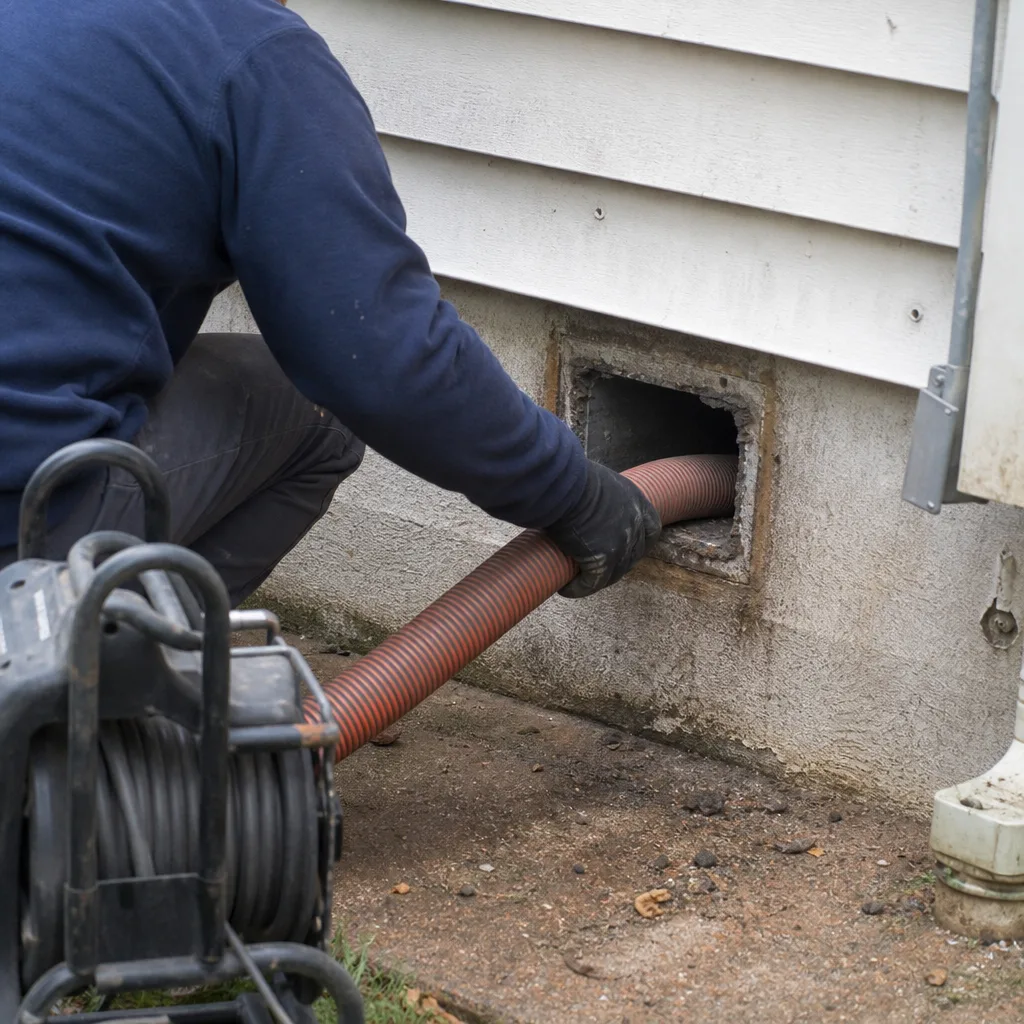 Before
 After
After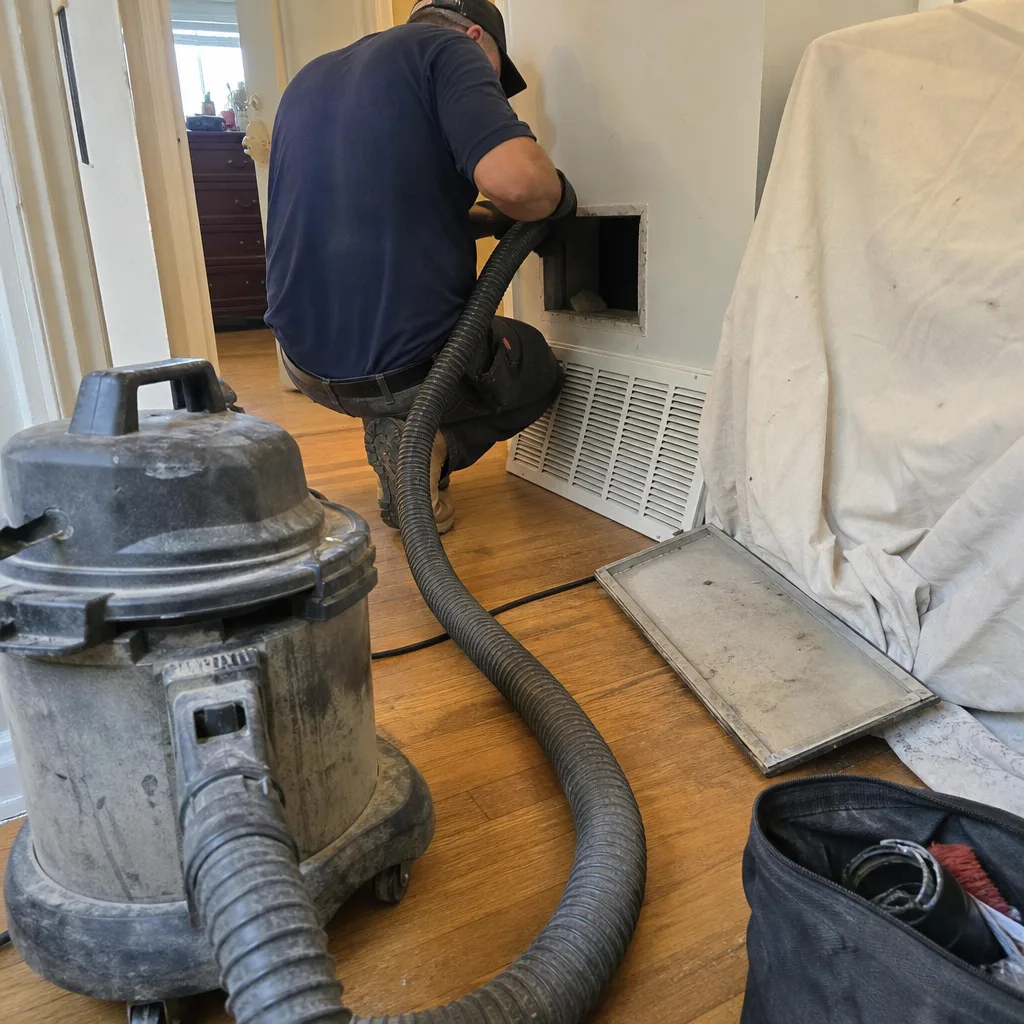 Before
 After
After