
Last updated October 15, 2026
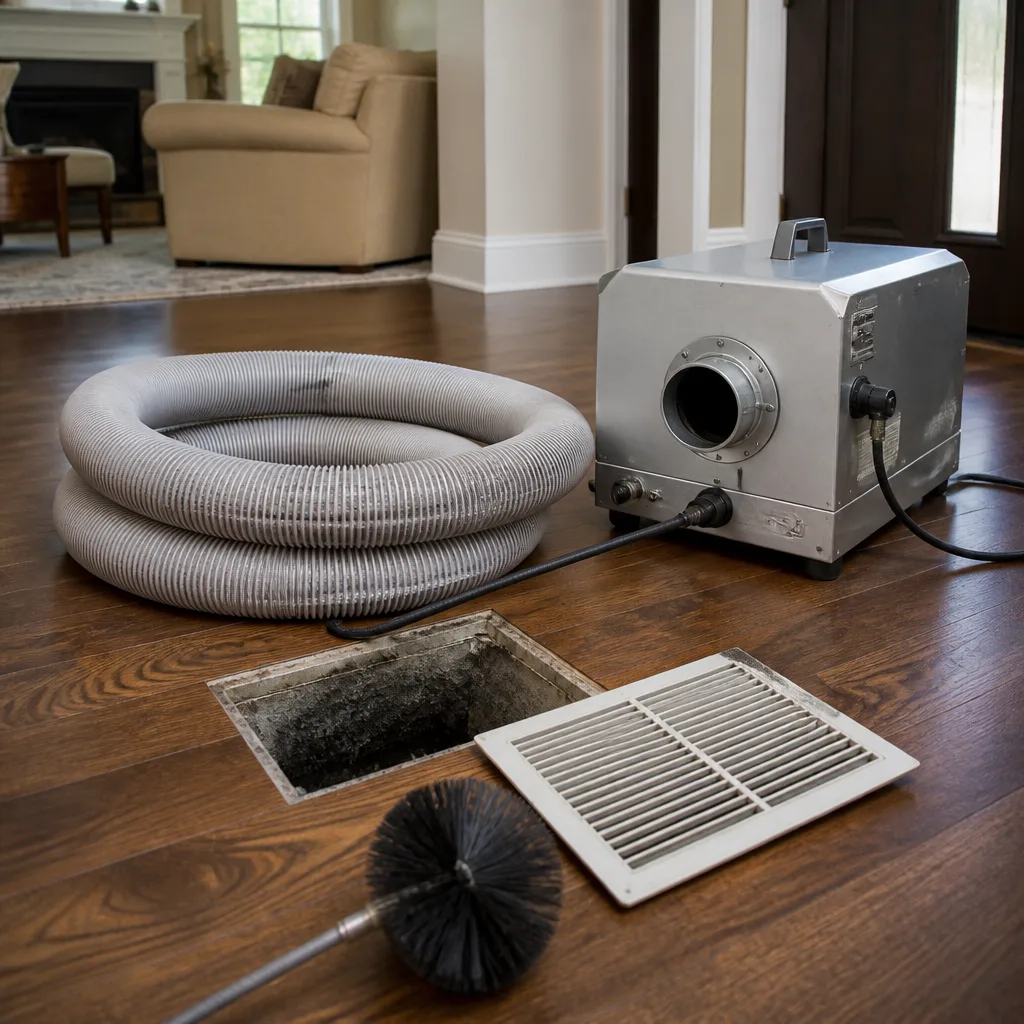 Whole-home duct cleaning
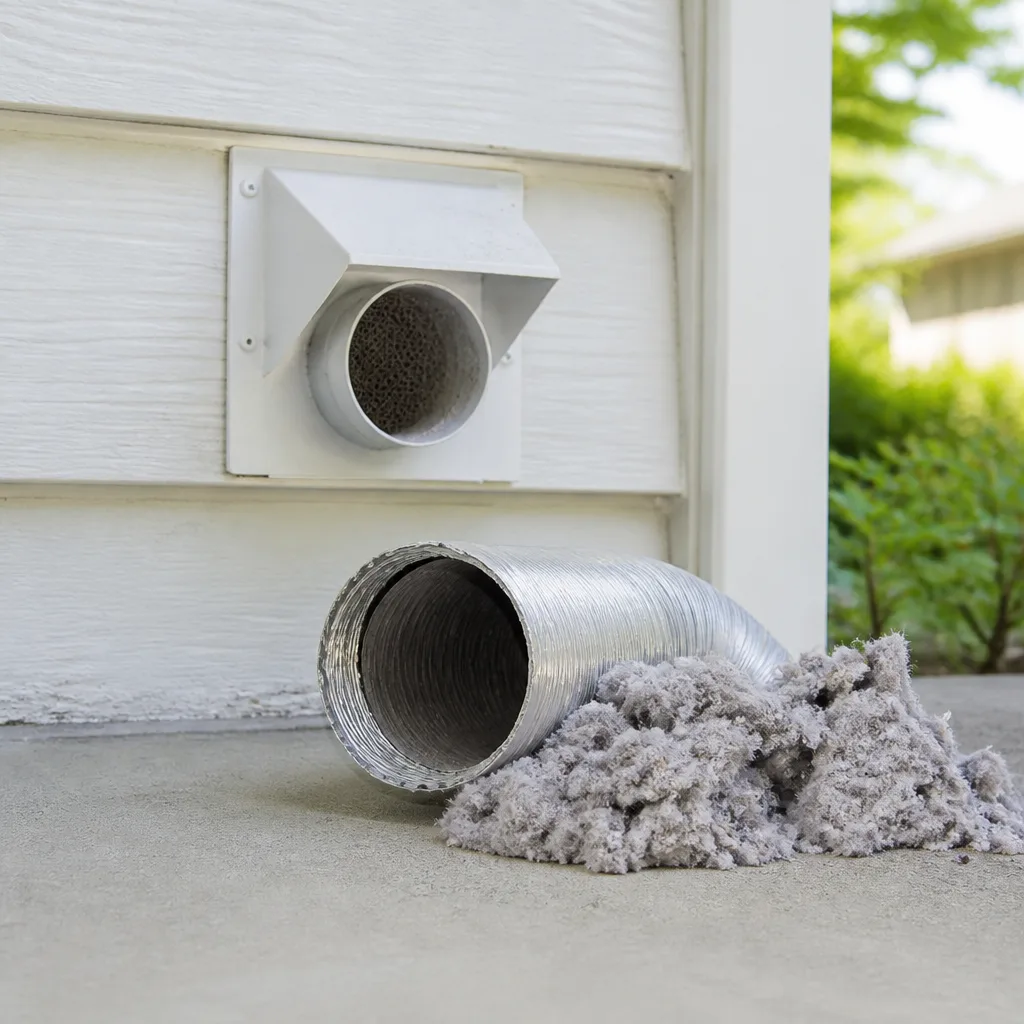 Dryer vent cleaning
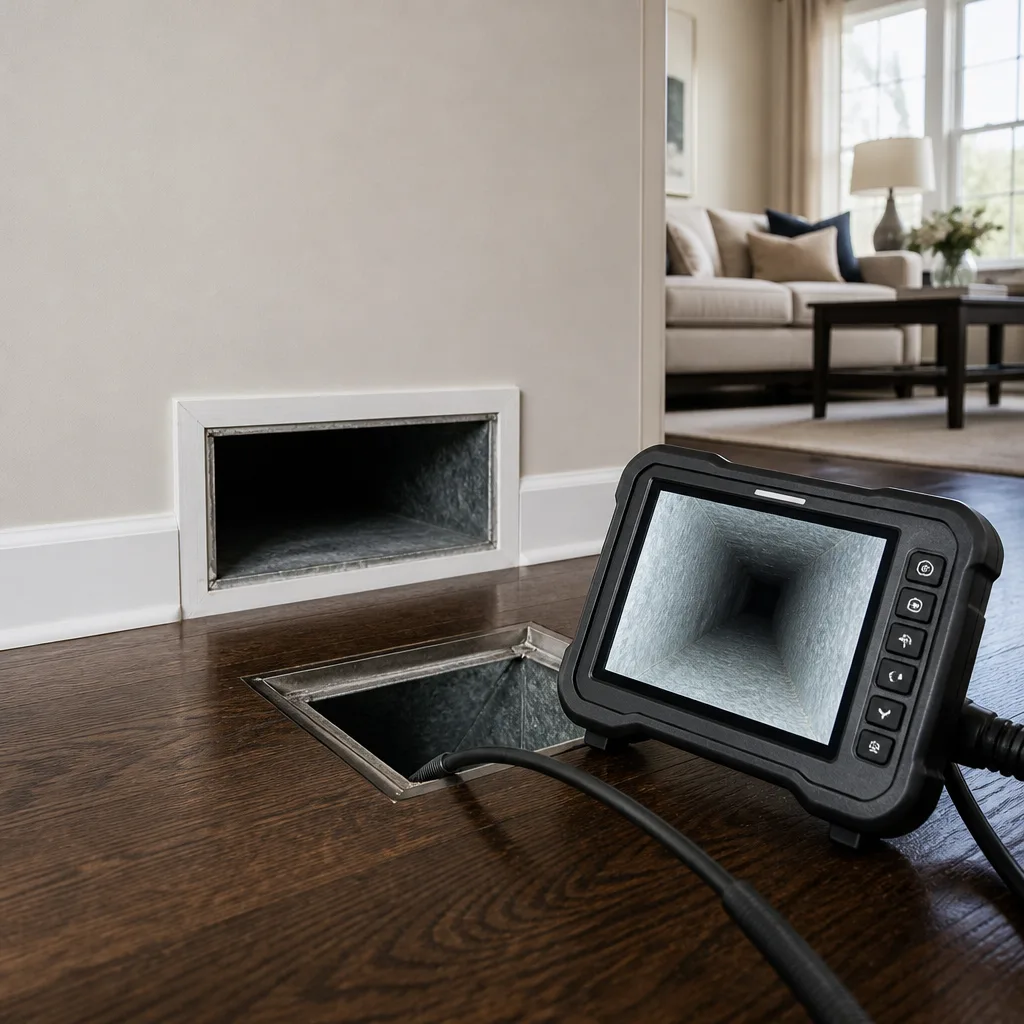 Camera inspection
 Sanitizing & deodorizing
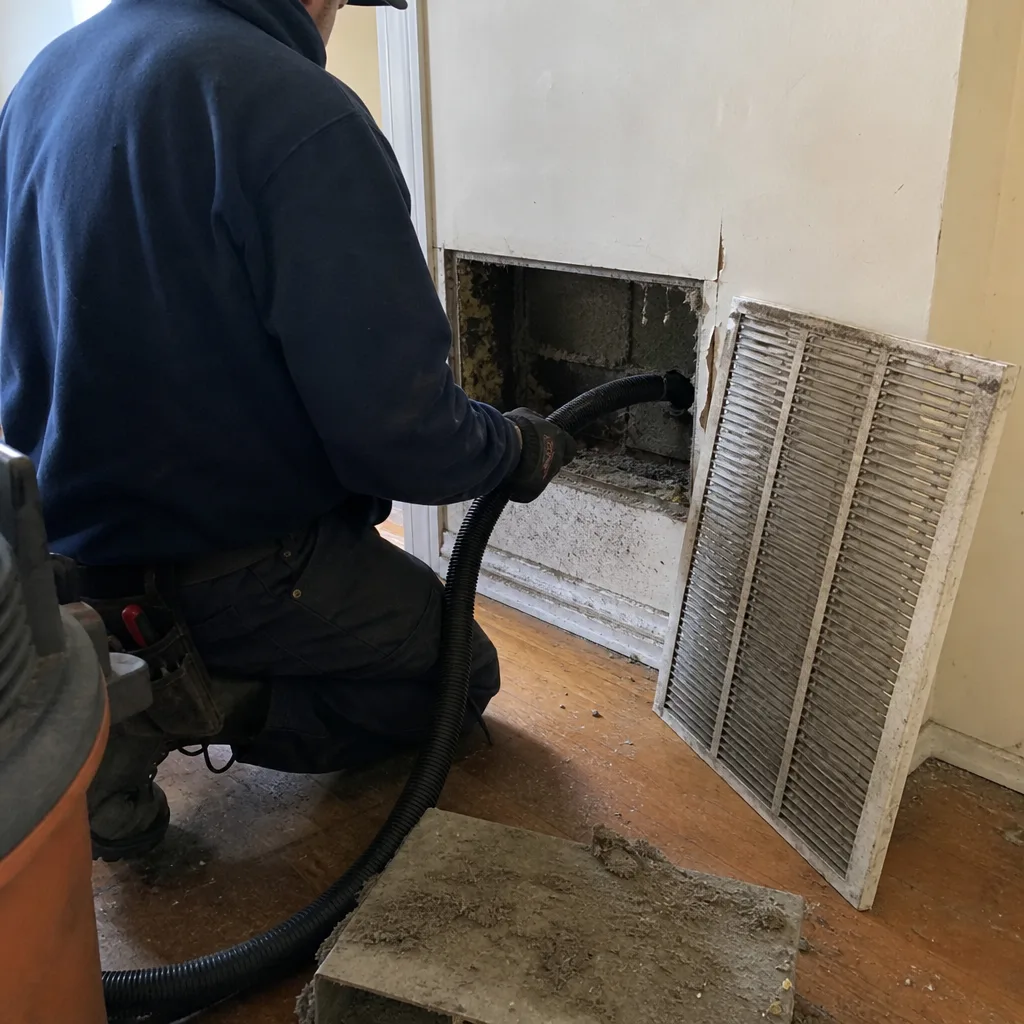
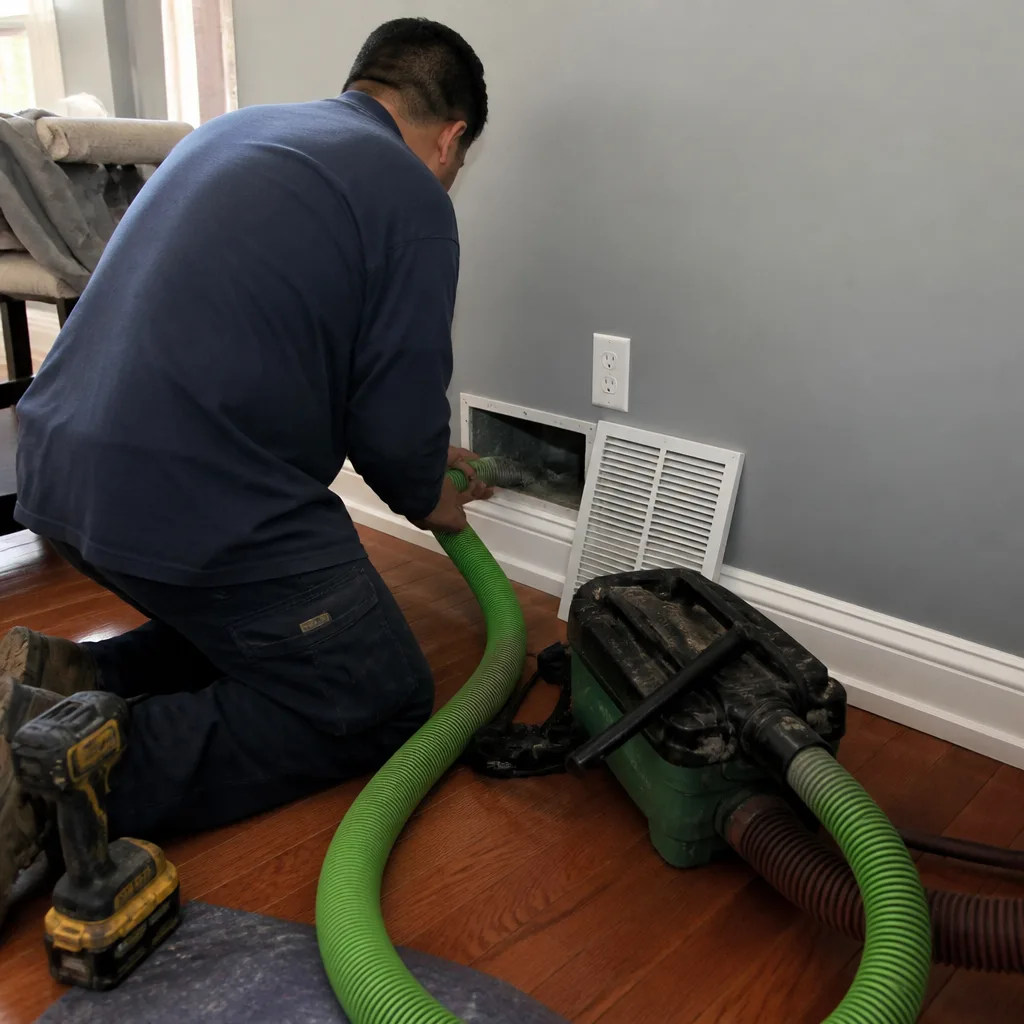
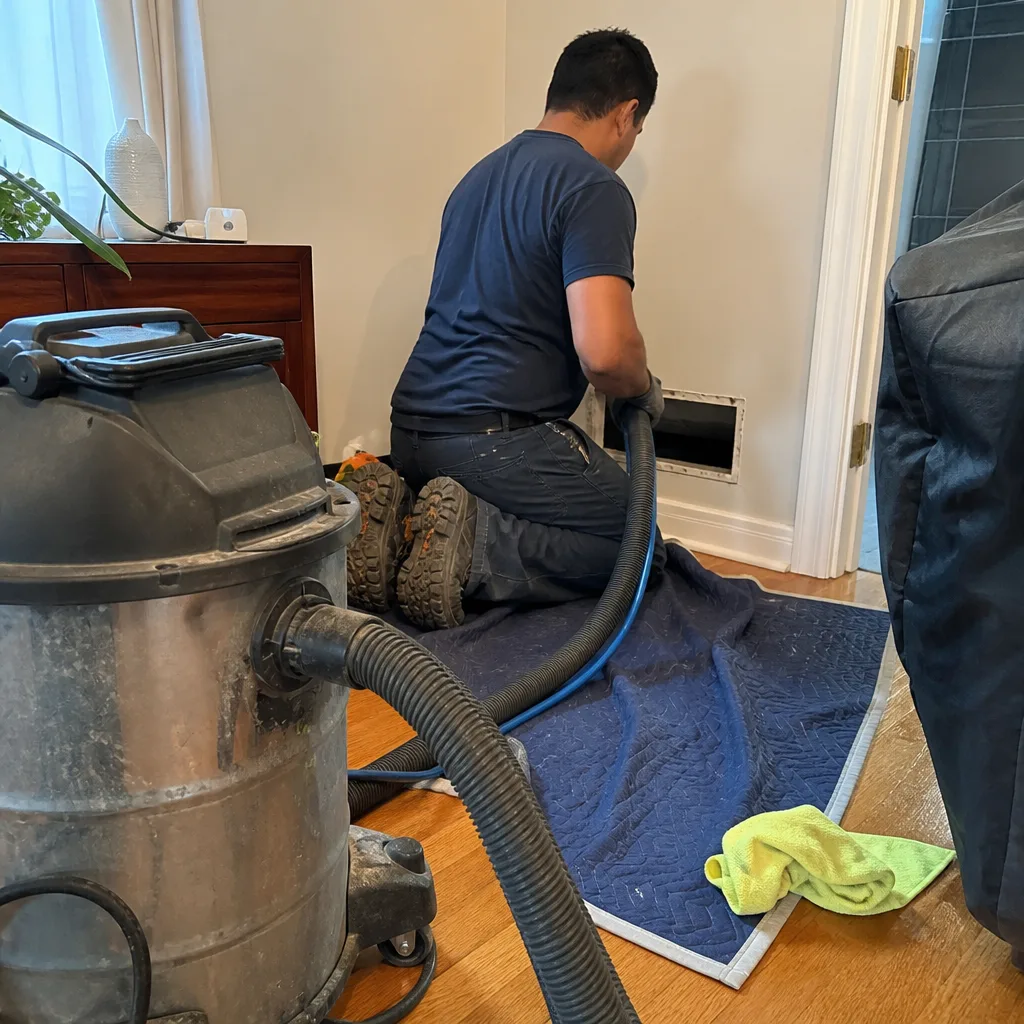
Whole-system duct and dryer vent check with before-and-after photos - you see exactly what came out of your vents
That "$99 whole-house special" is a bait ad - the real number appears once they are in your hallway, or the "clean" is a shop-vac at the register. We photograph the inside of your ducts before and after instead.
Seasonal Air Duct Cleaning Care for Queens: Year-Round Homeowner’s Guide
Here’s something most Queens homeowners don’t realize until it’s too late: the air ducts in a typical Queens home are doing dramatically different things in January than they are in July. The same ductwork that quietly moves heated air through your house all winter becomes a cool, dark, condensation-prone environment the moment summer humidity arrives. The worst time to discover your ducts are circulating mold spores is the first week of July when you turn on central air for the season and the smell hits every room simultaneously. That discovery is almost always preventable with a 20-minute spring check that most homeowners skip because no one told them it existed. In this guide, we’ll walk through exactly what your ducts are doing in each Queens season, what to check and when, and how to time professional cleaning so you’re never paying emergency prices for a problem that built up quietly over 18 months.
Quick Answer
Seasonal air duct cleaning in Queens isn’t a single annual event. It’s a rhythm of maintenance that responds to four distinct weather patterns: dry winter heating that bakes dust onto duct walls, humid summers that create mold risk, allergen-heavy falls that load filters faster than any other season, and construction-heavy spring months that introduce drywall dust and debris into ventilation systems. Homeowners who sync simple monthly checks and one professional cleaning every 2 to 3 years to these seasonal rhythms consistently spend less over time than those who wait for a problem to announce itself.
Styles & brands we work with
Table of Contents
- Winter: What Heating Season Does to Your Ducts
- Spring: The AC Startup Check Most Homeowners Skip
- Summer: Humidity, Mold, and the Air You’re Actually Breathing
- Fall: Allergen Season and Filter Strategy
- Construction Season: Why Renovation Timing Matters for Duct Cleaning
- The Seasonal Filter Upgrade Strategy
- Month-by-Month Reference Card
- Common Mistakes to Avoid
- When to Call a Professional
- Frequently Asked Questions
Winter: What Heating Season Does to Your Ducts
From late November through March, your furnace or heat pump is moving air through your ductwork for hours every day. That air is warm and dry, sometimes down to 20% relative humidity in older Queens homes with radiators or forced-air systems running constantly. What most homeowners don’t see is what that dry heat does to the inside of ductwork: it bakes the fine dust that settled during the fall onto the duct walls like a kiln firing clay.
Here’s the sequence we see in Queens homes every winter:
- December: Holiday cooking introduces grease particles and food odors into the air stream. These particles are sticky and grab onto duct surfaces.
- January: Dry heat cures those particles into a hardened layer. A simple vacuum no longer removes it; it requires mechanical agitation.
- February: Static electricity builds as outdoor humidity stays low. Dust clings to return registers and becomes visible around vents in bedrooms and living rooms.
- March: The accumulated layer is now thick enough that your system is working harder to maintain the same airflow, and you’re paying for it in utility costs.
What should you actually do in winter? Three things. First, check your return air registers monthly and wipe them down if you see visible dust accumulation. Second, keep furniture at least 6 inches away from return vents; blocking return airflow is the fastest way to force your furnace to overwork. Third, if you run a humidifier, keep indoor humidity between 30% and 45%. Above 45% and you’re creating condensation risk inside cool duct runs, especially in basements and crawlspaces common in neighborhoods like Forest Hills, Kew Gardens, and Bayside.
One thing we tell Linden Air Duct Queens home customers every winter: if you hear a whistling sound from your vents, that’s not normal. It usually means a return is partially blocked or your filter is past due. Both are cheap fixes now and expensive repairs later.
Spring: The AC Startup Check Most Homeowners Skip
The single most consequential moment in your duct system’s year is the day you switch from heat to central air. That transition, usually in late April or early May in Queens, is when dormant problems become active ones. Mold spores that sat inert in cool, dry ducts all winter get their first dose of warm, moisture-laden air. Dust that had settled gets pushed into living spaces by the blower running at full speed for the first time in months.
Here is the 20-minute spring startup check we recommend to every homeowner in Queens:
- Replace the filter before you run the AC, not after. The filter that served you through heating season is loaded with winter dust. Running AC through it just redistributes that dust into your home.
- Inspect visible ductwork in the basement or utility closet. Look for moisture stains, rust, or separated joints. All three indicate condensation or air leakage that will get worse in summer humidity.
- Sniff each supply register. Turn the fan on (not the AC, just the fan) and walk room to room. A musty smell from any vent is a mold or mildew signal. A burning smell on first startup is usually just dust on the heating elements burning off, but if it persists more than 10 minutes, call a professional.
- Listen for rattling or banging. Loose duct hangers and separated joints are most audible when the system first starts after months of thermal contraction. Addressing them now prevents air loss that means higher summer cooling bills.
- Check your condensate drain line. If your air handler has a visible drain line, make sure it’s clear. A clogged drain in a Queens summer means water backing up into the unit, which means mold, which means duct contamination.
Spring is also the season when we get the most calls for Air Duct Cleaning in Queens. Homeowners run the AC for the first time, smell something off, and realize the problem has been building since the previous fall. If that’s you, you’re not alone, and it’s almost always fixable in a single visit.
Summer: Humidity, Mold, and the Air You’re Actually Breathing
Queens summers are not like summers in Arizona or Nevada. Our humidity regularly sits above 60% from June through early September, and that changes what’s happening inside your ducts in ways you cannot see but can definitely feel. Here’s the mechanism: cool air from your AC flows through ductwork that’s often running through unconditioned spaces like attics, crawlspaces, and basements. When warm, humid outdoor air meets the cold duct surface, condensation forms. That condensation is exactly what mold spores need to activate.
In our experience serving Queens since 2004, the neighborhoods with the highest summer mold-in-ducts calls are the ones with older housing stock and basement or crawlspace duct runs. We regularly see it in areas like Jackson Heights, Elmhurst, and Woodside where homes were built before central air was standard and ductwork was retrofitted into spaces never designed for conditioned air. The mold isn’t visible from the vent; it’s growing on the interior surfaces of ducts that run through humid crawlspaces, and by the time you smell it, it’s already circulating through every room.
What can you do in summer without calling anyone?
- Keep your AC fan on “Auto,” not “On.” Running the fan continuously keeps duct surfaces cooler for more hours per day and increases condensation. “Auto” lets the system cycle naturally.
- Close crawlspace vents and run a dehumidifier if you have one. Keeping the crawlspace below 50% relative humidity is the single most effective mold prevention measure for homes with ductwork in that space.
- Inspect your air handler’s drain pan monthly. Standing water in the pan means the drain is clogging. That water evaporates into the air stream and gets distributed throughout your home.
- If you smell mustiness that gets worse when the AC runs, don’t mask it with air fresheners. You’re not covering a smell; you’re ignoring a mechanical problem.
Summer is also the season when we remind our Air Duct Repair in Queens customers that small leaks in ductwork are costing them money every single day. A 10% air leak in a typical Queens home’s duct system means roughly 10% of the cool air you paid for is going into your attic or crawlspace instead of your living room. Fixing that leak is often cheaper than one month of summer electric bills at peak rates.
Fall: Allergen Season and Filter Strategy
By late August, ragweed pollen begins its six-week reign across the five boroughs. By mid-September, leaf mold and grass pollens add to the load. By October, when windows close and the heat kicks on for the first time, everything that settled into your home over the fall gets pulled into your return registers and pushed through your ductwork. Fall is when we see the highest rate of filter loading and the highest indoor allergen complaints from Queens homeowners.
Here’s what’s happening in your ducts during fall:
- Return registers act as vacuums. Every time the blower runs, it’s pulling in whatever is floating near the floor, including pollen tracked in on shoes and pet dander shed during fall coat changes.
- Filter efficiency drops as load increases. A MERV 8 filter that loaded up in 60 days during summer may load completely in 30 days during peak pollen season.
- Duct interiors become allergen reservoirs. Pollen that makes it past the filter settles in low-airflow sections of ductwork. When the blower kicks on in winter, that pollen is redistributed into your home.
The practical steps for fall are straightforward. Replace your filter at the start of September and again in mid-October, even if the first one doesn’t look completely loaded. Consider upgrading to a higher-MERV filter during peak allergen season, but check your system’s specifications first; a MERV 13 filter restricts airflow more than a MERV 8, and some older Queens systems can’t handle the restriction without overworking the blower. If you’re unsure, our technicians at Air Duct Cleaning in Queens can tell you exactly what your system can handle during a routine visit.
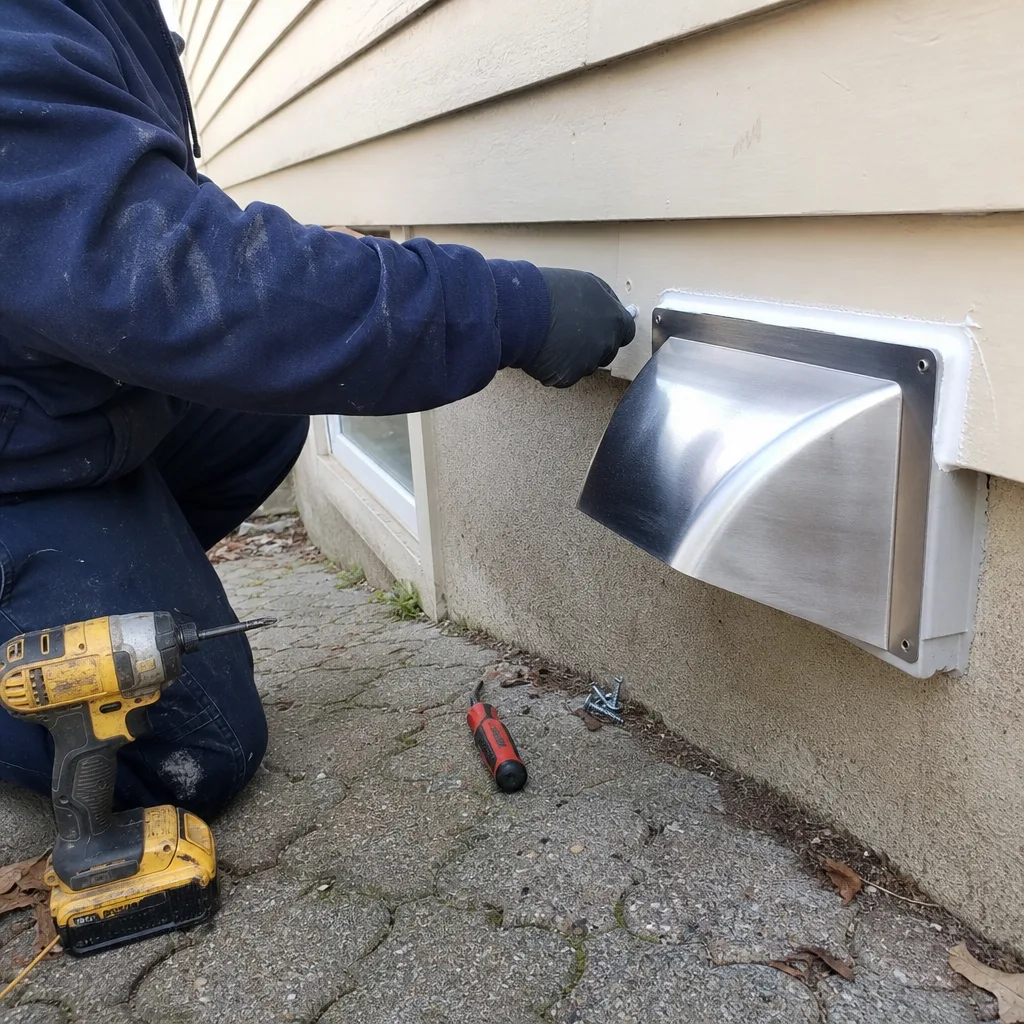
Fall is also the most common season for Dryer Vent Cleaning in Queens, and for good reason. Dryer lint accumulates fastest when fall fabrics (sweaters, flannels, heavier bedding) start moving through the laundry cycle. A clogged dryer vent is a fire hazard and a duct contamination source, since lint blown past a partially clogged vent often finds its way into adjacent ductwork.
Construction Season: Why Renovation Timing Matters for Duct Cleaning
Queens has a construction season, and it runs from roughly April through October. That’s when the permits get pulled, the dumpsters appear on the sidewalk, and the drywall dust starts flying. If your home or a neighbor’s home is under renovation, your duct system is absorbing the impact even if your windows are closed. Drywall dust, sawdust, and demolition debris are fine enough to slip past standard filters and settle into duct interiors, where they combine with existing dust to form a thick, cement-like layer that resists normal airflow.
Here’s what we tell homeowners in Queens about renovation and ductwork:
- If your own home is being renovated, have ducts cleaned after the work is done, not before. Cleaning before renovation means the ducts just get filled again. The correct sequence is: renovation, then professional cleaning, then a new filter.
- If a neighbor is renovating, check your filter twice as often during the project. Construction dust travels farther than you’d think, especially in attached housing common in areas like Astoria, Sunnyside, and Ridgewood.
- Seal supply registers in rooms being renovated. Plastic sheeting and painter’s tape over every vent in the work zone will prevent most construction dust from entering the duct system in the first place.
- Run your system fan continuously during active construction hours. This seems counterintuitive, but running the fan with a clean, appropriately rated filter turns your HVAC system into a whole-house air cleaner that captures airborne dust before it settles.
If you’ve just finished a renovation anywhere in Queens, the most valuable next step is a professional air duct cleaning paired with a filter replacement. It’s the difference between breathing construction residue for the next year and starting fresh.
The Seasonal Filter Upgrade Strategy
Most Queens homeowners buy the same filter every time and never think about it again. That’s a mistake, because what your filter needs to do changes with the season. Here’s a simple framework we use with our customers, based on how different pollutants behave through the year:
Winter (December to February)
Indoor air is driest and dustiest. A standard MERV 8 filter is usually sufficient, because the primary challenge is dust loading from closed windows and dry conditions. Focus on regular replacement (every 60 to 90 days) rather than higher filtration. If you use a wood-burning fireplace or stove, particulate load increases and you may want a MERV 11.
Spring (March to May)
Tree pollens peak in late March through April in Queens. If you have allergy sufferers in the home, this is when a MERV 11 or MERV 13 filter earns its cost. That said, check your system’s static pressure rating before installing a high-MERV filter; systems designed for MERV 8 may struggle with the airflow restriction, which reduces efficiency and can freeze the coil in summer.
Summer (June to August)
Humidity is the primary challenge, and no filter removes humidity. What matters most in summer is keeping the coil and drain pan clean so the system can dehumidify properly. A MERV 8 filter is fine for most homes, but replace it monthly in July and August because the system runs constantly.
Fall (September to November)
Ragweed, leaf mold, and grass pollens dominate. This is the season for high-MERV filtration if anyone in the home has fall allergies. A MERV 13 filter will capture most ragweed pollen (which is relatively large at 18 to 20 microns) and a significant portion of leaf mold spores. The trade-off is airflow restriction, so again, check compatibility first.
One additional point that most guides miss: if you run high-MERV filters year-round, you’re restricting airflow 100% of the time and overworking your blower motor in every season. High-MERV filtration is a tool, not a lifestyle. Use it seasonally, and let your system breathe during winter and summer when humidity and dust, not pollen, are the primary concerns. The air-quality products we work with, including brands like Aprilaire and Honeywell, are designed for specific system types, and matching the right filtration to the right system matters more than buying the highest number on the shelf.
Month-by-Month Reference Card
Here’s the single-page reference we give our Queens customers. One action item per month. That’s it. If you do these twelve things, you will catch nearly every duct problem before it becomes expensive.
- January: Wipe down all visible supply and return registers. Look for uneven dust accumulation, which indicates airflow imbalance.
- February: Listen for unusual noises (whistling, rattling, banging) while the system runs. Investigate any port that makes noise.
- March: Schedule any planned duct cleaning or repair before summer demand hits. Late spring is the sweet spot for availability and mild weather.
- April: Replace the filter. This is the pre-AC filter change, not optional.
- May: Run the full spring startup check described above. Focus on drainage, smells, and airflow from every vent.
- June: Check your condensate drain line and air handler drain pan for standing water. This is the month it starts to matter.
- July: Replace the filter again if you run AC daily. Peak load means faster loading.
- August: Inspect crawlspace or basement ductwork for condensation or moisture stains. A flashlight and five minutes is all it takes.
- September: Replace the filter with a high-MERV option if fall allergies are a concern in your household.
- October: Replace the filter again regardless of MERV rating. Pollen season loads filters fast.
- November: Have your dryer vent inspected or cleaned before heavy winter drying begins. Fall fabrics load lint quickly.
- December: Check the filter and replace if it’s been more than 90 days. Holiday cooking and closed windows mean higher indoor particulate loads.
Common Mistakes to Avoid
- Replacing filters on a strict 90-day calendar without checking them. A filter in a Queens home with pets and central air may load completely in 30 days during summer or fall. Check monthly, replace as needed, and you’ll never wonder if you’re running a clogged system.
- Closing vents in unused rooms to save energy. This increases static pressure in the duct system and forces your blower to work harder. It doesn’t save money; it just redistributes the load and can cause duct leaks at weak joints. In older Queens homes, those weak joints are everywhere.
- Using the highest MERV filter available without checking system compatibility. MERV 13 filters restrict airflow significantly. If your system wasn’t designed for that restriction, you’re reducing efficiency and shortening blower motor life.
- Ignoring a musty smell because it comes and goes. Mold in ducts doesn’t go away on its own; it just becomes less noticeable when the AC isn’t running. By the time you smell it consistently, the contamination has spread farther and costs more to remediate.
- Cleaning your own ducts with a shop vac and a brush. Duct cleaning requires negative-pressure extraction equipment to prevent loosened debris from being blown into living spaces. A shop vac on a duct just resuspends the dust and sends it through the house. We use professional-grade equipment from brands like Nikro and Rotobrush for exactly this reason.
- Cleaning ducts before a home renovation instead of after. If you’re renovating, you will generate dust that gets into the ducts. Clean afterward. The only exception is if demolition exposed duct ends that are actively pulling dust into the system during construction.
- Assuming a newer home doesn’t need duct cleaning. New construction in Queens often leaves drywall dust, sawdust, and even debris inside ductwork before the first owner moves in. New to you doesn’t mean clean.
When to Call a Professional
Most seasonal maintenance is DIY. But there are specific scenarios where calling a professional is the right call, and waiting makes things worse. If you smell a persistent musty odor that gets stronger when the system runs, call. That’s mold, and it won’t fix itself. If you see visible dust blowing from your supply registers when the system turns on, call. That’s a clogged or damaged duct, and you’re breathing whatever is being blown out. If your energy bills have climbed without a clear reason and your filters are clean, call. Air leaks in ductwork are invisible but measurable, and a professional can locate and seal them. If you’ve just completed a renovation or purchased an older Queens home with unknown maintenance history, call. The cost of professional air duct cleaning is a fraction of what it costs to run a compromised system for another year.
When you’re ready to have a full system assessment, Linden Air Duct Queens offers free estimates in Queens. Call (845) 237-0925 and a live person will answer, 24/7. No voicemail loops, no callback queues. You’ll get a written price before any work begins, and every technician who comes to your door will have been background-checked, identity-verified, and introduced to you by name and photo before arrival. That’s the Threshold Standard, and it applies to every job we do.
Frequently Asked Questions
Professional air duct cleaning in Queens typically runs between $350 and $700 for a standard single-family home, depending on the number of systems, accessibility of the ductwork, and whether the system has been cleaned before. Homes with multiple HVAC systems, older ductwork, or known contamination will fall toward the higher end. At Linden Air Duct Queens, we put the price in writing before any work begins, so you’ll know the exact cost before we start. Call (845) 237-0925 for a free estimate specific to your home.
For most Queens homes, professional duct cleaning every 2 to 3 years is appropriate. Homes with pets, smokers, recent renovation, occupants with respiratory conditions, or visible mold should be cleaned more frequently. The National Air Duct Cleaners Association recommends inspecting ducts annually and cleaning as needed rather than cleaning on a fixed calendar.
Low-ball duct cleaning quotes typically come from companies that either under-clean (running a vacuum briefly without agitating the duct walls) or use bait-and-switch tactics where the initial price covers only a portion of the system. Professional duct cleaning requires mechanical agitation plus negative-pressure extraction, which takes time and equipment. If one quote is dramatically lower than others, ask what equipment they use and exactly what the price includes.
A reputable company will provide before-and-after photos of your ductwork interior. These photos should show the same access point from the same angle, and the difference should be obvious. At Linden Air Duct Queens, we document every job with before-and-after photos so you can see exactly what was removed from your system. If a company doesn’t offer photos, ask why.
Duct cleaning can reduce the allergen load circulating through your home, particularly if your ducts haven’t been cleaned in years and you have pets or live in an area with heavy seasonal pollen. However, duct cleaning is not a substitute for air filtration. The most effective approach combines clean ducts with appropriately rated filters changed on a seasonal schedule. For Queens residents with strong fall ragweed allergies, we recommend a professional cleaning before September followed by high-MERV filtration through October.
Air duct cleaning removes dust, debris, and contaminants from your home’s heating and cooling ductwork. Dryer vent cleaning removes lint buildup from the exhaust vent that carries hot air and moisture from your dryer to the outside. They are separate systems and require separate services. Dryer vents should be cleaned annually as a fire-prevention measure, while air ducts can go 2 to 3 years in most Queens homes. At Linden Air Duct Queens, we offer both as distinct services, each with its own written price and scope of work.
Consumer-grade equipment cannot match the negative-pressure extraction machines used by professional duct cleaners. A shop vacuum and a brush will remove loose dust near the vent openings but won’t touch the interior surfaces where the problematic accumulation lives. Worse, amateur cleaning can damage ductwork and loosen debris that then blows into living spaces. This is a job where the equipment matters, and the equipment that works is not available at Home Depot. If you need professional Air Duct Cleaning in Queens, call (845) 237-0925 and we’ll give you a free estimate with a written price before any work begins.
The Bottom Line
Queens duct care is not a once-a-year event. It’s a system that responds differently to each season, and the homeowners who understand those seasonal rhythms spend less money over time because they’re never catching up to a problem that compounded quietly for 18 months. In winter, watch for static dust accumulation and blocked returns. In spring, run the startup check before you switch to AC. In summer, focus on humidity and condensation in crawlspaces and basements. In fall, upgrade filtration before allergen season peaks. Do one small thing per month, schedule professional cleaning every 2 to 3 years, and keep an eye on filters. That’s the whole system. If you’d like help with any part of it in Queens, we’re at (845) 237-0925, and a live person answers every time.
Written by Marcus Veale, Owner at Linden Air Duct Queens, serving Queens since 2004.
See the difference
 Before
 After
After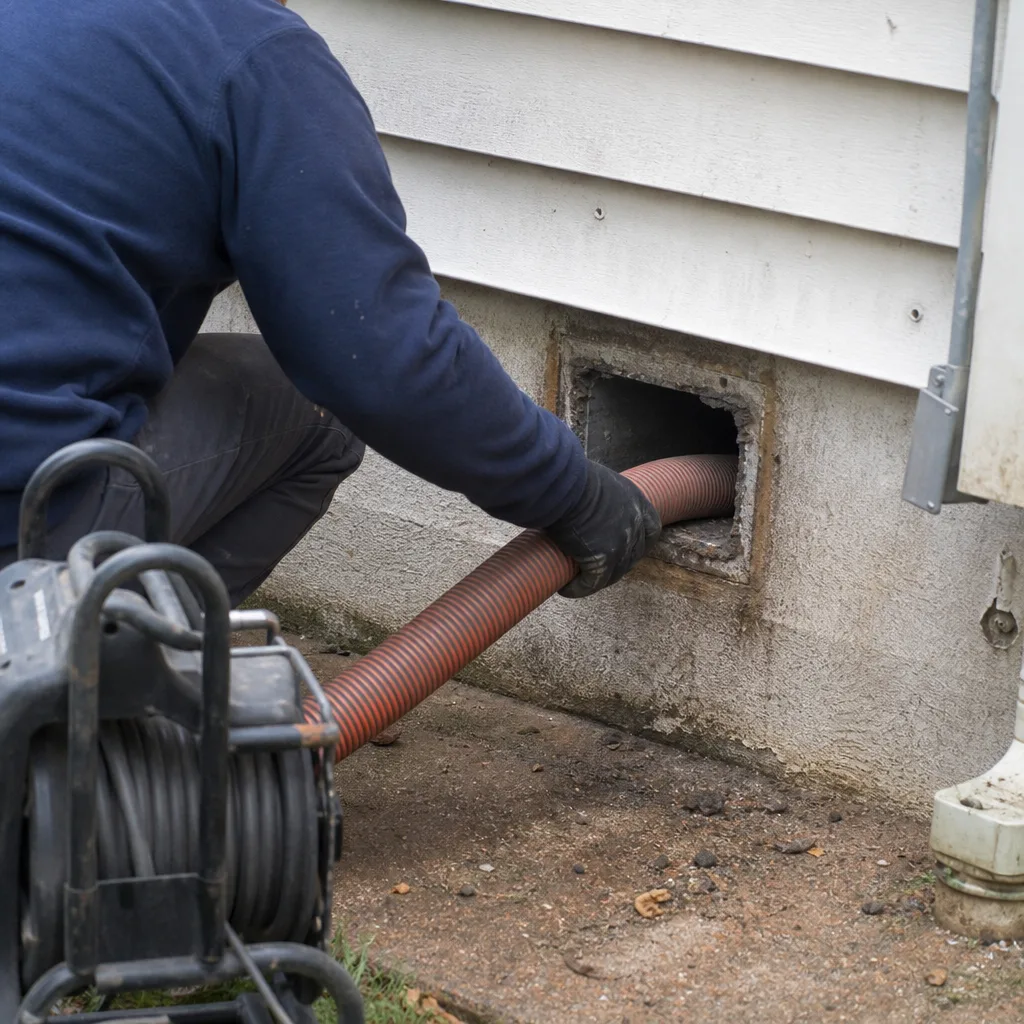 Before
 After
After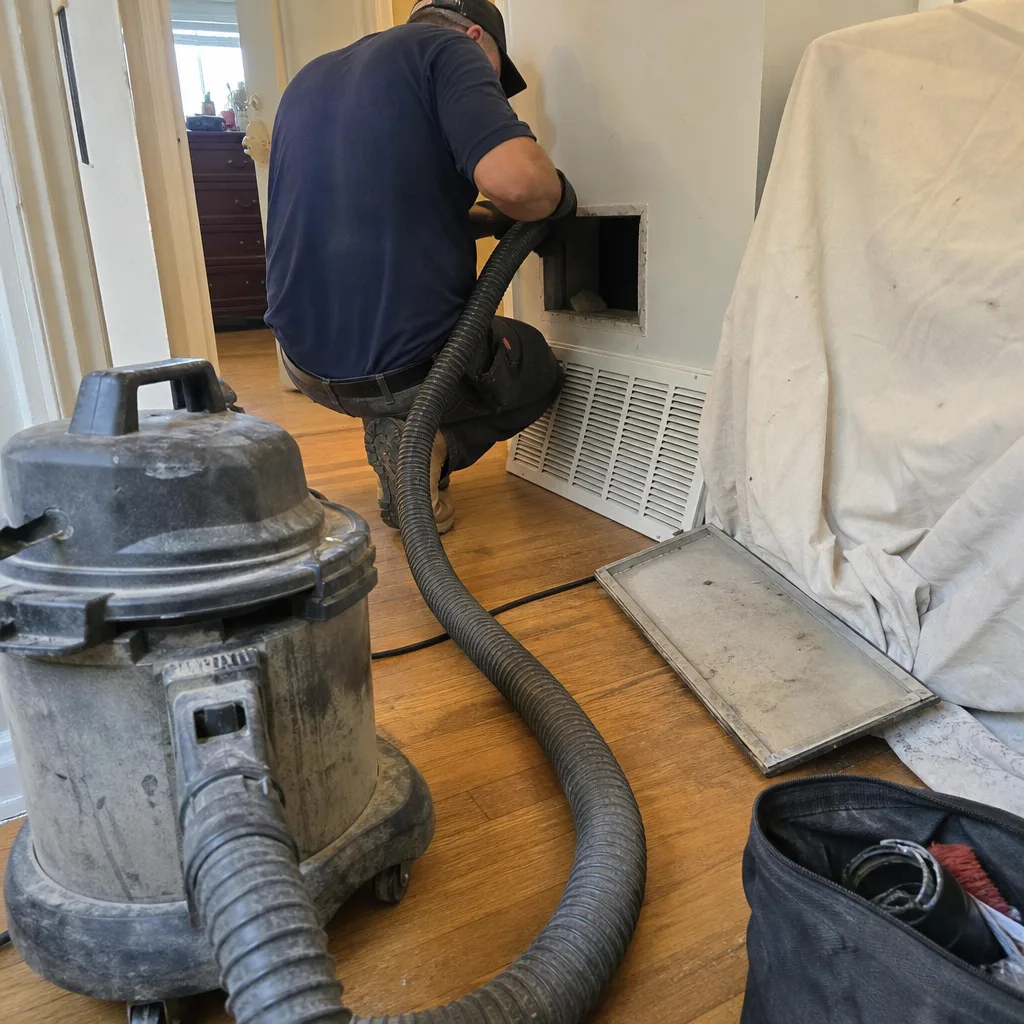 Before
 After
After